New Essay at The Daily Beast: Books to Transform Your Sad Life

In my new essay for the Daily Beast, I offer a syllabus for self-transformation. From my introduction to the book list:

As the New Year dawns, let’s admit that the American psyche is a dilapidated maze of funhouse mirrors that leads nowhere. It should not shock even the most credulous patriot that many people who spend their internal lives within this maze of narcissism and dysfunction have major problems. One in five Americans suffers from some kind of mental illness, according to the Substance Abuse and Mental Health Services Administration. The New York Times recently reported that suicide rates are rising so rapidly and steadily that more Americans now die of suicide than in car accidents. In a turn that vindicates Aldous Huxley, one in ten Americans ingests their daily Soma supplement in the form of antidepressants.

Many Americans are like Soren Kierkegaard’s allegorical corpse who did not realize he was alive until the morning he woke up dead—aimlessly wandering around in a drug addled haze, indulging smart phone addiction, disconnected from reality and community, while wondering why they feel unhappy and unfulfilled.

To worsen their condition of alienation and dejection, many Americans, in an attempt to feel better, read books that manipulatively sell mindless optimism and pathological hope. The cult of positive thinking turns out one hit after another, both secular—The Secret—and Christian—Joel Osteen’s prosperity gospel. The delusion that changing a life is as simple as believing it will change, and the poison that pretends God wants people who pray early and often to win the lottery, only raise expectations to unrealistic heights, and set desperate people up for a crushing fall with a crash landing.

Since Americans seem to love making New Years resolutions, now might be a sensible time for many to resolve to gain maturity and perspective in 2014. Such a process of self-education can and should begin with the close reading of books containing wisdom that will alleviate their anxiety, provide edifying purpose, and begin to transform their minds from circuses to cathedrals.

Check out my ten book recommendations, including Albert Camus, Ernest Hemingway, Gore Vidal, American history books, sexual advice, and a “loafer’s manifesto”, at the Daily Beast.
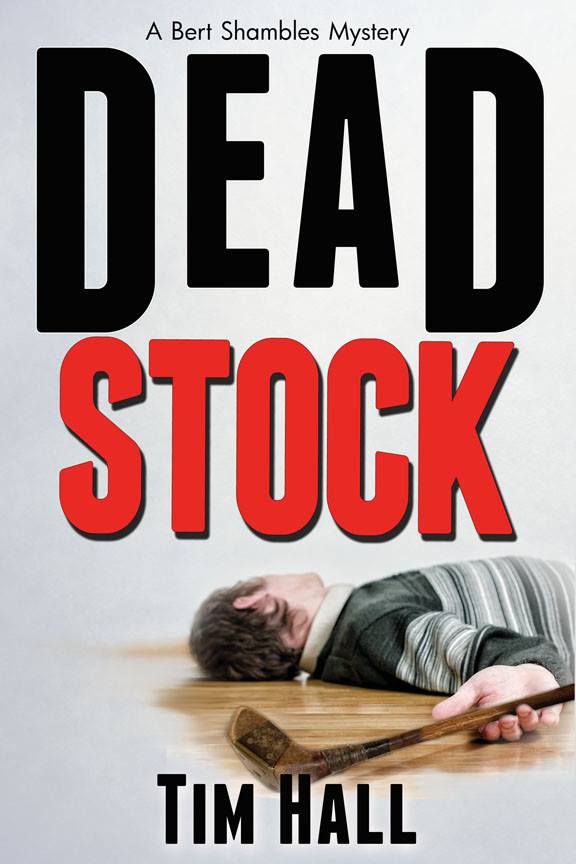
New Essay at Splice Today: A Cozy Allegory in a Cozy Mystery

Tim Hall is a man with answers. He is a man with humor. He is a man with guts. He is a brilliant writer. He is a friend of mine.

I’ve written about his work before with an essay about his autobiographical novels and a review of his collaboration to create a web comic.

In my first essay for Splice Today, I review his new mystery novel, Dead Stock. Dead Stock is a book that will make any lucid reader laugh, but the book is so full of insight and inspiration, that in between belly laughs, it will hit you in the same region, provoking introspection and examination of the culture in which Dead Stock‘s unlikely hero – Bert Shambles – lives.

Dead Stock

New Essay at The Daily Beast – The Legend of Brown Dog: A Great American Hero Gets His Due

My favorite literary character is Brown Dog. Brown Dog is the libidinous trickster, the quiet hero, the ribald dreamer, and the aggressive life lover from the mind of one of America’s greatest writers, Jim Harrison.

Brown Dog manages to challenge the pedestrian pettiness, the boring moralism, the Puritanical asceticism, and the politically correct conventions of American culture. More importantly, he has fun, and he lives according to a code of compassion, while doing it.

I recently had the pleasure and privilege of writing about Brown Dog for the Daily Beast. The resultant essay is one of my personal favorites. I hope that readers who already admire the work of Jim Harrison find it insightful, and that readers just making an introduction to Harrison and Brown Dog use it as motivation to pick up the books.

As I write in the essay, “Any American in desperate need of rescue from long commutes, cable news, shop talk from a cubicle, dreary suburban sprawl, and the contrived sexuality of predictable pop culture, would do well to sit down with Jim Harrison’s Brown Dog, and meet a new friend who will graciously give him a tour of a wonderfully debauched and always inspired life of energy, mystery, and avidity.”

The tour can start here.

New Column for Indianapolis Star: State Has No Business Banning Gay Marriage

State Has No Business Banning Gay Marriage

Indianapolis Star: December 5, 2013

The Indiana State Constitution is based on the United States Constitution – perhaps the most important document in the history of humanity’s fight for freedom. Considering the legal brilliance, political empowerment, and spiritual hope that the Constitution embodies, it would set a dangerous precedent, and betray the meaning of America to amend the constitution – at the state or federal level – to limit liberty, rather than enlarge it.

The ink that the American founders used to write the Constitution doubled as the concrete that provided the foundation for Republican Democracy around the world. An essential part of its vision is the separation of church and state. While that actual phrase might not appear in the Constitution, the founders, especially Thomas Jefferson, made it clear in letters that they intended to keep bureaucrats out of the business of religion, and keep clerical bullies from imposing their dogmas on the duties of governance. The Supreme Court has upheld and validated the separation interpretation of the Establishment Clause in dozens of cases dating back hundreds of years.

It is for these reasons that any thoughtful, reasonable, and moral person must vehemently oppose the proposal to change the Indiana State Constitution to include an amendment banning gay marriage.

It is not the State’s role to make judgments on the consensual sex lives of adults. If America is to remain a friendly home for freedom, it must extend that freedom, and the equality of opportunity and dignity that goes along with it, to gay Americans – the majority of whom are law abiding, taxpaying citizens who conduct themselves with decency and responsibility.

Homosexuality is not only a form of sex. It is also a form of love. All Americans, but especially those who wear the label of “family values conservative,” should seek to honor that love in the maintenance of a society that values romantic commitment and familial care.

The entire debate surrounding gay marriage is cartoonishly absurd, given that there is no credible argument against it. One side uses legal precedent, philosophical argumentation in keeping with the American tradition of individual liberty, and simple kindness, while the other recites passages from a book written thousands of years ago.

The Bible, along with any other religious text, is to have no influence on the laws of our secular government. Any religious doctrine can influence the way people think and behave in a free country, but the Constitution clearly prohibits the exercise of religion during legislative activity or judicial decision-making.

When gay marriage opponents claim that their argument is The Bible, they are confessing that they have no argument.

American opinion is reaching a favorable consensus on gay marriage, and when legalization does inevitably occur, no church will have to marry a gay couple. The beauty of the separation of church and state is that it is mutually protective of religion and governmental autonomy and interest.

That being said, on the issue of religion, gay marriage opponents have yet to answer important questions.

The Bible prohibits adultery, divorce, eating shellfish, working on the Sabbath, wearing clothing of mixed fabrics, wearing gold, and touching a woman experiencing her period. For most of these crimes – including working on Sundays – the penalty is death.

Why are the loudest defenders of Biblical law, who so eagerly denounce gay marriage, not insisting that these injunctions also influence government legislation?

Might it be that they are not truly motivated by religion, but that they are using religion as a cover story for the exclusion and hurtful treatment of people they just don’t like?

David Masciotra is the author of All That We Learned About Living: The Art and Legacy of John Mellencamp (forthcoming, The University Press of Kentucky) and Against Traffic: Essays on Politics and Identity. For more information visit http://www.davidmasciotra.com.

New Article at The Daily Beast: Atheist Ex-Pastor’s Mission to Red America

Last weekend, on the Sabbath, the Daily Beast published an article I wrote after interviewing an inspirational man named Jerry DeWitt.

DeWitt is a former Pentecostal minister, who after years of study, wrestling with doubt, and finding that his personal experiences could not justify his faith claims, left the church and discovered he was an atheist.

The community he loves and cherishes of DeRidder, Louisiana does not look too kindly on heretics. He planned to live a quiet life of introspection and secular employment. A strange series of circumstances led to his outing as an atheist, and rather than run, he decided to stand strong and tall in defiance against hatred and commitment toward honesty, authenticity, and secular advocacy.

Book-cover-for-Hope-After-Faith-An-ex-PastHe is currently working hard to make the Community Mission Chapel – a secular congregation – successful in the deep South. It is no easy task, but DeWitt is not a man who cowers from a challenge.

While celebrity atheist provocateurs, like Richard Dawkins and Sam Harris, write bestselling books from the comfort and friendly quarters of elite universities, DeWitt is taking heavy fire in one of the most ballistic battles of the culture wars.

Read about his important story and inspirational work on the Daily Beast.

New Essay for The American Conservative: Are Video Games the New Novels?

In my recent essay for the American Conservative, “Are Video Games the New Novels?”, I answer with a resounding and unequivocal “no.”

The essay is largely a response to an article by Nick Gillespie in Time in which he praises video games as the most important art form of the 21st Century, and compares them favorably to the novels of Charles Dickens. Gillespie is a journalist and polemicist I greatly admire. His libertarian activism and advocacy with Reason magazine is of crucial importance in a political arena hosting a brawl between one wing that wants to rob America’s liberty and another wing that wants to revoke its freedoms.

His argument in support of grown men and women wastefully idling their hours on toys designed for children is dreadfully unconvincing, however.

beavisandbutthead-volume4-08In my essay, I argue that video games are damning evidence of how American culture has undergone a process of juvenilization (it has become difficult to find real adults), which I also wrote about for Front Porch Republic and True/Slant, and I rely on Marshall McLuhan to explain that electronic games, despite their content, are bad for the attention span and inferior to literature. “The medium is the message,” as the old dog put it a long time ago.

On an interesting side note, followers of my work are well aware that I tackle many controversial political, religious, and cultural issues, but never do I attract scorn equal to that of the adult video game player. The gamers come out of their rooms to attack anyone who will question their favorite hobby. It often seems to me that they protest too much.

New Column for the Indianapolis Star: Living Wage? It’s Often Missing On College Campuses

The worst labor practices in the country belong to the elite universities, and the most lucrative scam in American life, is the higher education hustle.

It is not difficult to find discussion in the mainstream media of the staggering and paralytic amounts of student debt that young Americans now struggle to pay after graduating college. It is easy to come across reports of rising tuition rates, but still hidden is a full expose of the higher education hustle.

That is, the big government and big education scam to create an administrative class at the universities, and increase government revenues through usury on student loans.

While colleges across the country increase tuition and hire more underpaid adjuncts to teach courses, they also hire a shameful amount of well-paid administrators. Three separate studies have confirmed that the number one cause of rising tuition rates is “administrative bloat.”

The higher education hustle story recently became even more important when the American left went into convulsions over the hourly wages of McDonald’s employees. Liberals insist that part time cashiers at fast food restaurants, most of whom are high school or college students, deserve a “living wage.” Yet, those same liberals are amazingly silent on the issue of poverty pay for adjunct instructors, who have Master’s Degrees or PhD’s, and according to a study from Northwestern University, are better at teaching that tenured faculty.

I issue a full indictment of the university system, and the higher education hustle, in my new column – “Living Wage? It’s Often Missing on College Campuses”.

New Column for The Indianapolis Star: Obama’s Policies in Conflict with King’s Legacy

I’m running late posting this one, but I will say that the most important point of my latest column for the Indianapolis Star – “Obama’s Policies in Conflict with King’s Legacy” – is not the obvious that the President is a lying fool whose war crimes and disastrous management of domestic affairs are shameful, but that race, as proven by scientific discover, no longer has any meaning. Identity politics are stupid and dangerous, and those who engage in them, deserve equally harsh and dismissive labeling.

All human beings are 99.9 identical in our DNA. In the post-genome age of human understanding, to stand against racism is to reject the separation of people according to race.

Read the rest of the column to see how I attempt to relate the sociologically relevant discoveries of biology to contemporary American politics.

New Column for Indianapolis Star: Authoritarianism Comes from the Left and Right

The major disagreement of the two major political parties in America, along with the two major strains of political thought they represent, is over what right, freedoms, and liberties the government should revoke and remove from the people.

Seeing through the frivolity, distortion, and false dichotomy of two groups of autocrats fighting for control is revelatory in that it leads the citizen to adopt a political position of intelligence, mutual respect for other citizens, and libertarian consistency.

My friend Tim Hall – who is also one of my favorite novelists – helped me formulate this important insight over lunch one afternoon when he said, “There is no real liberalism in this country. There is left authoritarian and right authoritarian.”

The Hall way of moving through the bullshit of political debate is where I enter my new column for the Indianapolis Star. I encourage everyone to read it in full.

The Atlantic Runs My Interview with Historian and Cultural Critic Morris Berman

Morris Berman is a starry eyed realist whose message is not for the faint of intellect or hardhearted. He is an important and wise historian whose trilogy of books on the decline of America (The Twilight of American Culture, Dark Ages America, and Why America Failed) takes the unpopular, but serious and persuasive view that the American economy and empire are in freefall, with no hope for recovery.

Followers of my work should remember that I wrote an extensive review of Berman’s trilogy on America that Truthout published under the headline, “America: What Happened?”

I make the argument in that essay, as I do in my introduction of my new interview with Berman – “How America’s Culture of Hustling is Dark and Empty”, that his work is of profound, and also, because of his tough, challenging, and realistic message, singular importance.

I recently had the opportunity to meet Morris and share a few drinks with him in a quiet, Grand Rapids, Michigan bar. It delighted me to discover that his sense of humor, easygoing camaraderie, and generous disposition, makes him more likable, and his work, more appealing.

Soren Kierkegaard summarized the consequences of the unexamined life by telling the story of a man who never realized he was alive until he woke up dead. Berman worries that many Americans find themselves in the position of Kierkegaard’s corpse. He also admits that he was once there – caught in a tedium of pursuits (a bad marriage, the hustle for tenure) he now calls “unnecessary,” “wasteful”, and “stupid.”

In Berman’s new book – Spinning Straw Into Gold – he examines his own life, and ruminates on what finally provided his life with meaning, purpose, and peace. He leads by example, and through his personal and profound rumination on his own life, he gives readers challenge and inspiration to find the meaning of their own lives.

It would be wrong to call Spinning Straw Into Gold “self-help”, except only to say that it reinvents the self-help genre. It liberates it from the hollow clichés and boring platitudes of the Joel Osteen or Rhonda Byrne bestseller, and returns it to the enlivening, enlightening, and enchanting world of philosophy.

I interview Berman on the new book for The Atlantic.

ssigIf you take a moment to read the comments after the interview, you’ll treat yourself to a great display of existential meltdown. In the interview, Berman states that most Americans are “afraid, angry, and desperate.” American commenters, in an attempt to refute Berman’s analysis, then proceed to unleash a torrent of invective, vitriol, and mean spirited attack on the author, about whom they know they little.

One particular strain of comments, I feel, deserves a moment under the spotlight, if only to embarrass and humiliate those responsible for it.

Many readers attempt to rebuke and ridicule Berman and his argument about the emptiness of American culture, and the search for meaning and authenticity, by making the claim that his “privilege” nullifies his work. Here is an example of such brain dead reasoning:

“Interesting perspective for the single mother to mull while in line at Walmart. Maybe once she ontologically knows herself she can quit at least one of her part time jobs to find something which enchants her.”

First, Berman is not rich, but he is successful. Success demands respect, not condemnation. Second, and more important, taking this argument to its logical endpoint would require the dismissal of all philosophy. Philosophers always come from a certain place of “privilege”, because without it, they would not have the time, energy or ability to lecture, write, and contemplate the world.

Wasn’t Socrates just rambling about esoteric bullshit while there were slaves struggling to survive in Greece? Yet, no one would respond to the Socratic method or Socratic intellectualism with the sanctimony of  “Interesting perspective for the slave to mull while building the monuments.”

Identity politics and insulting people for their success are two contemporary distractions from the larger questions of American identity, meaning in an increasingly meaningless culture, and authenticity in a artificial society. These are the questions Berman tackles in his new book, and the questions we consider in our conversation.