New Essay on the Daily Beast – “David Foster Wallace: The Postmodern Traditionalist”

David Foster Wallace has received such deserved praise as “genius” and “the most important writer of his generation.” He and his work have been the subject of several books, and an assortment of critics, scholars, and journalists have spilled ink and dedicated digital pixels to scrutinizing, analyzing, and criticizing his work. Given the abundance of attention that the late writer regularly receives, I am often surprised that many people seem to miss one of the most important points of his work.

I discovered David Foster Wallace through his collection of essays, Consider The Lobster. The opening essay – “Big Red Son” – features David Foster Wallace taking readers through a tour of the industry of pornography – “adult entertainment” as insiders call it. Wallace attends a convention for porn fans to meet starlets in Las Vegas, interviews Max Hardcore – one of the most vile pornographers who specialized in the simulated rape of young women made to appear underage before he was sentenced to prison – and acts as correspondent at the AVN Awards – the Oscars for porn. After reading it multiple times and listening to Wallace’s narration on the audiobook a few times, I concluded that it is the greatest work of literary journalism ever written, and possibly the best essay ever written.

Wallace’s nonfiction taught me a new way to write about experience – a way that is vibrant, alive, and personable, but also intellectually tough, complicated, and brave. He also showed me how to be funny without being silly, and without being insulting.

Years after reading Consider The Lobster, I’ve devoured all of his work – fiction and nonfiction alike – including the massive masterpiece Infinite Jest. His nonfiction, however, is the subject of my new essay at the Daily Beast. Focusing on his soon-to-be-released collection of essays, Both Flesh and Not, I purport the original theory that Wallace was a traditionalist in postmodern drag. He donned the costume of a postmodernist to gain entry into a world of liberal, sophisticated urbanites, and once inside the club, he distributed his traditionalist message of limits, loyalty to place, and elevation of human scale community. He prioritized spiritual values above marketplace principles, and he opposed the detached irony, libertine lifestyle, and secular cynicism of much of his generation. His nonfiction provided revelatory clues into the mysteries of his fiction. Realizing that his nonfiction bears philosophical resemblance to Christopher Lasch, Jimmy Carter, and G.K. Chesterton makes it much easier to understand why, for example, the hero of his last novel The Pale King is a Jesuit Priest who teaches tax law at Depaul University.

My essay is highly compromised. The original draft was about twice the length, but I am glad that I had the opportunity to promulgate my theory for an outlet as widely read and widely watched as the Daily Beast.

Many critics seem to deliberately miss what Wallace was saying by myopically focusing on how he was saying it. This is why so many reviewers were obsessed with Wallace as a humorist. It’s easier to laugh at the jokes – and the jokes were great – than to wrestle with the meaning.

In two essays, the first for PopMatters and now the second for the Daily Beast, I’ve tried to wrestle with the meaning of Wallace’s work. It is a challenge that is intimidating and threatening, but deeply important.
Truthout Reprints My Tribute To Gore Vidal

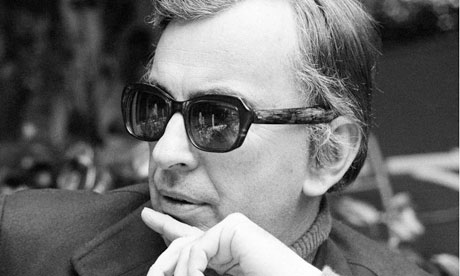
Truthout, the popular news and politics website, has reprinted my eulogizing tribute to Gore Vidal. The essay – “The Love of Light: Gore Vidal, 1925 – 2012” – was originally published on PopMatters.

Gore Vidal, more than any other writer, influenced me to become a writer. As I make clear in the essay, I entered the life of writing with the firm belief that I would never be as good as Vidal, but that I could spend my life trying. Nearly ten years later, I’m still trying, and I still believe that such an effort is one of nobility and integrity.

Readers of Gore Vidal know that his talent and intelligence extended far beyond political analysis. In my essay, I spend a great deal of time talking about his most inventive novels – many of which had little or no political implications. Vidal is, however, for better and for worse, most famous as a historian and social critic.

In the weeks since his death, I’ve found myself longing for Vidal’s brilliant, tough, and funny voice. I’d like to hear him turn his weaponry of wit and wisdom against the insanity of the current Presidential election, and I’d like to hear his insights – memorable and provocative to be sure – on the visible decline and decay of American civilization that he predicted throughout his career.

PopMatters has a smart audience drawn to its cultural commentary. I’m grateful for my post as PopMatters columnist, but I am also glad that Truthout – a website dedicated solely to politics – has reprinted the essay. I hope that the essay will encourage the Truthout audience to take accurate measure of the loss American political culture suffers in the absence of Gore Vidal.

The title of my essay, “The Love of Light,” comes from his extraordinary historical novel Julian:

“The spirit of what we were has fled. With Julian, the light went, and now nothing remains but to let the darkness come, and hope for a new sun and another day, born of time’s mystery and man’s love of light.”


I Interview Best Selling Author and Noir Master James Lee Burke

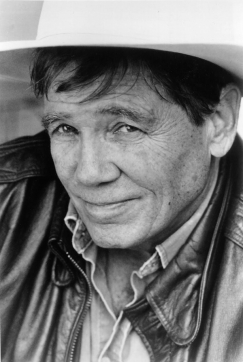
James Lee Burke is one of the best writers in America, and one of the true masters of the crime novel. His stories about homicide detective and recovering alcoholic Dave Robicheaux, set in New Orleans and New Iberia, along with his books about Texas Sheriff Hackberry Holland, effortlessly weave noir, mysticism, and politics to present a panoramic view of the American flesh and the human spirit. The genre in which he casts his seductive spell may be crime, but his masterful prose and penetrating insight elevate his work far beyond any genre, making him a literary treasure.

I discovered James Lee Burke after watching the film In The Electric Mist, starring Tommy Lee Jones as Dave Robicheaux, and based on Burke’s novel, In The Electric Mist with the Confederate Dead. Within days, I was reading Burke’s books, and since then, I’ve devoured much of his bibliography. I’ve also enjoyed listening to a few of the books on CD. The narration of Will Patton, who has starred in such movies as The Client, The Postman, and Brooklyn’s Finest, makes Burke’s soaring prose seem as if it was written for the stage, and not the page.

I recently had the pleasure and privilege of talking on the phone with Burke for an hour and twenty minutes. Writers often acquire the reputation of being reclusive, inhospitable, and cantankerous. Burke, however, was a largehearted gentleman. Our conversation ran well over the thirty minutes arranged by his publisher, and much of that was due to his genuine interest in my interpretation of his work and my ideas regarding its dominant themes. The final twenty minutes of our discussion involved a role reversal in which he asked me questions about my work and my life.

Burke’s work is important, because it is high quality literature. Excellence and greatness provide their own justification. Anyone who reads the soul-stirring, thought-provoking, and heart-pounding stories of Burke will intuitively understand how he fulfills the calling of the artist and strengthens his medium.

There is another component of importance to Burke’s novels, however, and it centers on the unique vision of life – especially American life – he brings to bear on modernity. The American Empire is collapsing, and the American economy is crashing. Burke surveys his surroundings, and righteously responds with a Leftist Christianity that, somehow without paradox, blends realism with mysticism. His voice is one calling for justice in the face of widespread exploitation of the poor, the environment, and weak by the powerful forces of greed, cruelty, and iniquity.

The Los Angeles Review of Books – a fine literary publication – allowed Burke and me to explore his career, philosophy, and vision of America by taking a journey into what I call the “noir mystic.” Asking Burke good questions was easy. Reading his work sharpens the mind. Burke’s answers make the interview, titled “Into The Noir Mystic: A Conversation about Injustice, Evil, and Redemption with James Lee Burke”, essential reading. In addition to his own work, we discuss how the U.S. government – at the state and federal levels – has become a distributor of vice, war, Christianity, the increasingly hostile character of American life, and the loss of “Edenic America.”