New Essay at Splice Today: A Cozy Allegory in a Cozy Mystery

Tim Hall is a man with answers. He is a man with humor. He is a man with guts. He is a brilliant writer. He is a friend of mine.

I’ve written about his work before with an essay about his autobiographical novels and a review of his collaboration to create a web comic.

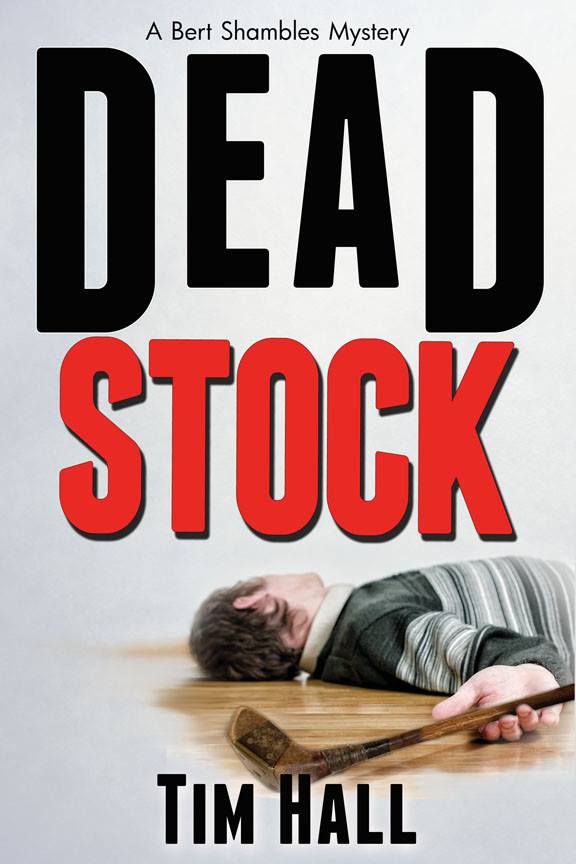
In my first essay for Splice Today, I review his new mystery novel, Dead Stock. Dead Stock is a book that will make any lucid reader laugh, but the book is so full of insight and inspiration, that in between belly laughs, it will hit you in the same region, provoking introspection and examination of the culture in which Dead Stock‘s unlikely hero – Bert Shambles – lives.

Dead Stock

New Essay at The Daily Beast – The Legend of Brown Dog: A Great American Hero Gets His Due

My favorite literary character is Brown Dog. Brown Dog is the libidinous trickster, the quiet hero, the ribald dreamer, and the aggressive life lover from the mind of one of America’s greatest writers, Jim Harrison.

Brown Dog manages to challenge the pedestrian pettiness, the boring moralism, the Puritanical asceticism, and the politically correct conventions of American culture. More importantly, he has fun, and he lives according to a code of compassion, while doing it.

I recently had the pleasure and privilege of writing about Brown Dog for the Daily Beast. The resultant essay is one of my personal favorites. I hope that readers who already admire the work of Jim Harrison find it insightful, and that readers just making an introduction to Harrison and Brown Dog use it as motivation to pick up the books.

As I write in the essay, “Any American in desperate need of rescue from long commutes, cable news, shop talk from a cubicle, dreary suburban sprawl, and the contrived sexuality of predictable pop culture, would do well to sit down with Jim Harrison’s Brown Dog, and meet a new friend who will graciously give him a tour of a wonderfully debauched and always inspired life of energy, mystery, and avidity.”

The tour can start here.

New Essay for The American Conservative: Are Video Games the New Novels?

In my recent essay for the American Conservative, “Are Video Games the New Novels?”, I answer with a resounding and unequivocal “no.”

The essay is largely a response to an article by Nick Gillespie in Time in which he praises video games as the most important art form of the 21st Century, and compares them favorably to the novels of Charles Dickens. Gillespie is a journalist and polemicist I greatly admire. His libertarian activism and advocacy with Reason magazine is of crucial importance in a political arena hosting a brawl between one wing that wants to rob America’s liberty and another wing that wants to revoke its freedoms.

His argument in support of grown men and women wastefully idling their hours on toys designed for children is dreadfully unconvincing, however.

beavisandbutthead-volume4-08In my essay, I argue that video games are damning evidence of how American culture has undergone a process of juvenilization (it has become difficult to find real adults), which I also wrote about for Front Porch Republic and True/Slant, and I rely on Marshall McLuhan to explain that electronic games, despite their content, are bad for the attention span and inferior to literature. “The medium is the message,” as the old dog put it a long time ago.

On an interesting side note, followers of my work are well aware that I tackle many controversial political, religious, and cultural issues, but never do I attract scorn equal to that of the adult video game player. The gamers come out of their rooms to attack anyone who will question their favorite hobby. It often seems to me that they protest too much.

The Atlantic Runs My Interview with Historian and Cultural Critic Morris Berman

Morris Berman is a starry eyed realist whose message is not for the faint of intellect or hardhearted. He is an important and wise historian whose trilogy of books on the decline of America (The Twilight of American Culture, Dark Ages America, and Why America Failed) takes the unpopular, but serious and persuasive view that the American economy and empire are in freefall, with no hope for recovery.

Followers of my work should remember that I wrote an extensive review of Berman’s trilogy on America that Truthout published under the headline, “America: What Happened?”

I make the argument in that essay, as I do in my introduction of my new interview with Berman – “How America’s Culture of Hustling is Dark and Empty”, that his work is of profound, and also, because of his tough, challenging, and realistic message, singular importance.

I recently had the opportunity to meet Morris and share a few drinks with him in a quiet, Grand Rapids, Michigan bar. It delighted me to discover that his sense of humor, easygoing camaraderie, and generous disposition, makes him more likable, and his work, more appealing.

Soren Kierkegaard summarized the consequences of the unexamined life by telling the story of a man who never realized he was alive until he woke up dead. Berman worries that many Americans find themselves in the position of Kierkegaard’s corpse. He also admits that he was once there – caught in a tedium of pursuits (a bad marriage, the hustle for tenure) he now calls “unnecessary,” “wasteful”, and “stupid.”

In Berman’s new book – Spinning Straw Into Gold – he examines his own life, and ruminates on what finally provided his life with meaning, purpose, and peace. He leads by example, and through his personal and profound rumination on his own life, he gives readers challenge and inspiration to find the meaning of their own lives.

It would be wrong to call Spinning Straw Into Gold “self-help”, except only to say that it reinvents the self-help genre. It liberates it from the hollow clichés and boring platitudes of the Joel Osteen or Rhonda Byrne bestseller, and returns it to the enlivening, enlightening, and enchanting world of philosophy.

I interview Berman on the new book for The Atlantic.

ssigIf you take a moment to read the comments after the interview, you’ll treat yourself to a great display of existential meltdown. In the interview, Berman states that most Americans are “afraid, angry, and desperate.” American commenters, in an attempt to refute Berman’s analysis, then proceed to unleash a torrent of invective, vitriol, and mean spirited attack on the author, about whom they know they little.

One particular strain of comments, I feel, deserves a moment under the spotlight, if only to embarrass and humiliate those responsible for it.

Many readers attempt to rebuke and ridicule Berman and his argument about the emptiness of American culture, and the search for meaning and authenticity, by making the claim that his “privilege” nullifies his work. Here is an example of such brain dead reasoning:

“Interesting perspective for the single mother to mull while in line at Walmart. Maybe once she ontologically knows herself she can quit at least one of her part time jobs to find something which enchants her.”

First, Berman is not rich, but he is successful. Success demands respect, not condemnation. Second, and more important, taking this argument to its logical endpoint would require the dismissal of all philosophy. Philosophers always come from a certain place of “privilege”, because without it, they would not have the time, energy or ability to lecture, write, and contemplate the world.

Wasn’t Socrates just rambling about esoteric bullshit while there were slaves struggling to survive in Greece? Yet, no one would respond to the Socratic method or Socratic intellectualism with the sanctimony of  “Interesting perspective for the slave to mull while building the monuments.”

Identity politics and insulting people for their success are two contemporary distractions from the larger questions of American identity, meaning in an increasingly meaningless culture, and authenticity in a artificial society. These are the questions Berman tackles in his new book, and the questions we consider in our conversation.

New Essay at The Daily Beast – “Where’s The Faith? Try Crime Novels”

In the fall, at the University of St. Francis, I will teach a course on crime literature and film noir. Too long relegated to the ghetto of “genre”, noir actually possesses deep and profound insights into human nature. Novelist James Lee Burke, the greatest contemporary practitioner of noir, said in an interview I conducted with him that he uses the word “noir” to capture a “Darwinian world in which all the parameters that we convince ourselves we obey and to which we conform have no existence at all.”

In my new essay for The Daily Beast, “Where’s The Faith? Try Crime Novels”, I write that “Crime and noir have always told the story of people who decide to cross an invisible but palpable moral line. It then measures the wreckage—physical, emotional, and spiritual—that results from the voluntary crossing over into another ethical universe—a colder, tougher, and uglier universe. These same questions haunt the tales of the Bible and the lives of the saints.”

OUT OF THE PAST / BUILD MY GALLOWS HIGHOne of my many intellectual obsessions is noir. Philosophically and stylistically it manages to capture the depths (depravity, weakness to temptation, lust for power, greed, and sex) and heights (heroism, enforcement of moral codes) of human nature through its tough themes and Jungian interplay of shadow and light.

In “Where’s The Faith?” I I weigh in on the ongoing literary discussion of whether or not God is dead in contemporary American literature. I submit that the most engaging and compelling themes of religion, spirituality, and morality are to be found in crime literature, especially that of Walter Mosley, Michael Connelly, and above all, James Lee Burke. The essay contains a quote from Burke that I obtained in an email interview for the article, and it offers new perspective on a smoldering literary debate.

New Feature at The Daily Beast – “The Jesus Novels”

James Lee Burke said when I interviewed him, “Find a metaphysical story you like and stick with it.” I like the story of Jesus and I’m sticking with it. As much as it sustains, empowers, and inspires me, I often find fault with the Biblical rendering of the narrative. Norman Mailer had the same criticism, claiming that the story of the Christian Messiah simultaneously living as God and man was indeed the “greatest story ever told”, but that it was not told in the “greatest way.” Mailer’s Jesus novel, The Gospel According to the Son, in which Jesus tells his story in the first person is a book that I turn to more than the Synoptic Gospels. It is a book of mystery, majesty, and magic.

My newest feature for the Daily Beast is a short run down of some of the best and most interesting Jesus novels. I offer barely more than summary of each book, but the article gives a good introduction to readers looking to read the Jesus story as shaped by the delicate hand of the novelist. In addition to Mailer, I give Fulton J. Sheen, Anne Rice, and Nikos Kazantzakis the most praise. Deepak Chopra is not much of a novelist, but I also compliment his surprising, insightful, and unconventional effort of speculation on Jesus’ teenage years and twenties.

Jesus NovelsChristians looking for a reminder of the Jesus story’s power will find any of these novels a good place to start, and nonbelievers will also enjoy them. As I point out in the article, the Jesus novels provide “artistic means of accessing a tale containing all of the most effective tools of drama—pity, terror, sadness, heroism, tragedy, and redemption.”

New Essay on the Daily Beast – “David Foster Wallace: The Postmodern Traditionalist”

David Foster Wallace has received such deserved praise as “genius” and “the most important writer of his generation.” He and his work have been the subject of several books, and an assortment of critics, scholars, and journalists have spilled ink and dedicated digital pixels to scrutinizing, analyzing, and criticizing his work. Given the abundance of attention that the late writer regularly receives, I am often surprised that many people seem to miss one of the most important points of his work.

I discovered David Foster Wallace through his collection of essays, Consider The Lobster. The opening essay – “Big Red Son” – features David Foster Wallace taking readers through a tour of the industry of pornography – “adult entertainment” as insiders call it. Wallace attends a convention for porn fans to meet starlets in Las Vegas, interviews Max Hardcore – one of the most vile pornographers who specialized in the simulated rape of young women made to appear underage before he was sentenced to prison – and acts as correspondent at the AVN Awards – the Oscars for porn. After reading it multiple times and listening to Wallace’s narration on the audiobook a few times, I concluded that it is the greatest work of literary journalism ever written, and possibly the best essay ever written.

Wallace’s nonfiction taught me a new way to write about experience – a way that is vibrant, alive, and personable, but also intellectually tough, complicated, and brave. He also showed me how to be funny without being silly, and without being insulting.

Years after reading Consider The Lobster, I’ve devoured all of his work – fiction and nonfiction alike – including the massive masterpiece Infinite Jest. His nonfiction, however, is the subject of my new essay at the Daily Beast. Focusing on his soon-to-be-released collection of essays, Both Flesh and Not, I purport the original theory that Wallace was a traditionalist in postmodern drag. He donned the costume of a postmodernist to gain entry into a world of liberal, sophisticated urbanites, and once inside the club, he distributed his traditionalist message of limits, loyalty to place, and elevation of human scale community. He prioritized spiritual values above marketplace principles, and he opposed the detached irony, libertine lifestyle, and secular cynicism of much of his generation. His nonfiction provided revelatory clues into the mysteries of his fiction. Realizing that his nonfiction bears philosophical resemblance to Christopher Lasch, Jimmy Carter, and G.K. Chesterton makes it much easier to understand why, for example, the hero of his last novel The Pale King is a Jesuit Priest who teaches tax law at Depaul University.

My essay is highly compromised. The original draft was about twice the length, but I am glad that I had the opportunity to promulgate my theory for an outlet as widely read and widely watched as the Daily Beast.

Many critics seem to deliberately miss what Wallace was saying by myopically focusing on how he was saying it. This is why so many reviewers were obsessed with Wallace as a humorist. It’s easier to laugh at the jokes – and the jokes were great – than to wrestle with the meaning.

In two essays, the first for PopMatters and now the second for the Daily Beast, I’ve tried to wrestle with the meaning of Wallace’s work. It is a challenge that is intimidating and threatening, but deeply important.

Truthout Reprints My Tribute To Gore Vidal

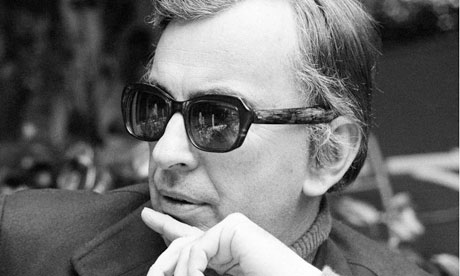
Truthout, the popular news and politics website, has reprinted my eulogizing tribute to Gore Vidal. The essay – “The Love of Light: Gore Vidal, 1925 – 2012” – was originally published on PopMatters.

Gore Vidal, more than any other writer, influenced me to become a writer. As I make clear in the essay, I entered the life of writing with the firm belief that I would never be as good as Vidal, but that I could spend my life trying. Nearly ten years later, I’m still trying, and I still believe that such an effort is one of nobility and integrity.

Readers of Gore Vidal know that his talent and intelligence extended far beyond political analysis. In my essay, I spend a great deal of time talking about his most inventive novels – many of which had little or no political implications. Vidal is, however, for better and for worse, most famous as a historian and social critic.

In the weeks since his death, I’ve found myself longing for Vidal’s brilliant, tough, and funny voice. I’d like to hear him turn his weaponry of wit and wisdom against the insanity of the current Presidential election, and I’d like to hear his insights – memorable and provocative to be sure – on the visible decline and decay of American civilization that he predicted throughout his career.

PopMatters has a smart audience drawn to its cultural commentary. I’m grateful for my post as PopMatters columnist, but I am also glad that Truthout – a website dedicated solely to politics – has reprinted the essay. I hope that the essay will encourage the Truthout audience to take accurate measure of the loss American political culture suffers in the absence of Gore Vidal.

The title of my essay, “The Love of Light,” comes from his extraordinary historical novel Julian:

“The spirit of what we were has fled. With Julian, the light went, and now nothing remains but to let the darkness come, and hope for a new sun and another day, born of time’s mystery and man’s love of light.”


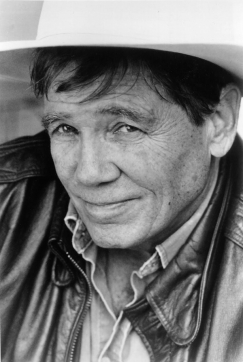
I Interview Best Selling Author and Noir Master James Lee Burke

James Lee Burke is one of the best writers in America, and one of the true masters of the crime novel. His stories about homicide detective and recovering alcoholic Dave Robicheaux, set in New Orleans and New Iberia, along with his books about Texas Sheriff Hackberry Holland, effortlessly weave noir, mysticism, and politics to present a panoramic view of the American flesh and the human spirit. The genre in which he casts his seductive spell may be crime, but his masterful prose and penetrating insight elevate his work far beyond any genre, making him a literary treasure.

I discovered James Lee Burke after watching the film In The Electric Mist, starring Tommy Lee Jones as Dave Robicheaux, and based on Burke’s novel, In The Electric Mist with the Confederate Dead. Within days, I was reading Burke’s books, and since then, I’ve devoured much of his bibliography. I’ve also enjoyed listening to a few of the books on CD. The narration of Will Patton, who has starred in such movies as The Client, The Postman, and Brooklyn’s Finest, makes Burke’s soaring prose seem as if it was written for the stage, and not the page.

I recently had the pleasure and privilege of talking on the phone with Burke for an hour and twenty minutes. Writers often acquire the reputation of being reclusive, inhospitable, and cantankerous. Burke, however, was a largehearted gentleman. Our conversation ran well over the thirty minutes arranged by his publisher, and much of that was due to his genuine interest in my interpretation of his work and my ideas regarding its dominant themes. The final twenty minutes of our discussion involved a role reversal in which he asked me questions about my work and my life.

Burke’s work is important, because it is high quality literature. Excellence and greatness provide their own justification. Anyone who reads the soul-stirring, thought-provoking, and heart-pounding stories of Burke will intuitively understand how he fulfills the calling of the artist and strengthens his medium.

There is another component of importance to Burke’s novels, however, and it centers on the unique vision of life – especially American life – he brings to bear on modernity. The American Empire is collapsing, and the American economy is crashing. Burke surveys his surroundings, and righteously responds with a Leftist Christianity that, somehow without paradox, blends realism with mysticism. His voice is one calling for justice in the face of widespread exploitation of the poor, the environment, and weak by the powerful forces of greed, cruelty, and iniquity.

The Los Angeles Review of Books – a fine literary publication – allowed Burke and me to explore his career, philosophy, and vision of America by taking a journey into what I call the “noir mystic.” Asking Burke good questions was easy. Reading his work sharpens the mind. Burke’s answers make the interview, titled “Into The Noir Mystic: A Conversation about Injustice, Evil, and Redemption with James Lee Burke”, essential reading. In addition to his own work, we discuss how the U.S. government – at the state and federal levels – has become a distributor of vice, war, Christianity, the increasingly hostile character of American life, and the loss of “Edenic America.”

My “Must Read” Book List for the Presidential Election Season

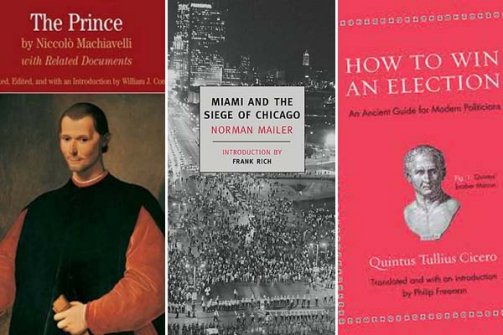
Today the Daily Beast is allowing me to force my tastes on the masses. I’ve written an annotated list of my top ten books for the Presidential election season. The list includes three of my favorite authors – Norman Mailer, David Foster Wallace, and Gore Vidal, who I recently eulogized for PopMatters.

One of the reasons I enjoy writing about pop culture and literature is that it enables me to introduce unpopular political or philosophical ideas into mainstream discussion.

The overarching theme of my Daily Beast article, and the dominant theme of all the books I’ve chosen for inclusion, is that Presidential politics is a ghastly and fraudulent spectacle of stagecraft in which personality dramas, public relations, and image branding silence and defeat discussion of the issues most important to the lives of the American people. It is often difficult to enter such an unforgiving critique into political debate, but with the usher of pop culture and/or literature, it can happen.

The main reason I’ve selected all of the books on the list, however, is that they are valuable and insightful works of art or research that elevate their respective genres to new standards of excellence. Everyone, regardless of ideology or level of political passion, could benefit from reading great books.