New Essay at Truthout – “America: What Happened?”

One of the reasons many formerly rational and moral liberals are so emotionally and intellectually invested in the advancement of President Obama, despite his war crimes, incompetence, and violations of constitutional law, is that the alternative is too frightening. It is too terrifying to admit that American civilization is in a state of collapse, and that there is no hope for recovery. The empire is crashing, the economy is hemorrhaging, the political system is eroding, and the culture is in a state of irreversible decay. President Obama is yet another technocratic corporate and Pentagon toady without the principles, integrity, or decency to serve the public interest and common good. Conditions may slightly worsen or slightly improve if he doesn’t win reelection, but it doesn’t really matter. As James McMurtry sang, “We can’t make it here anymore.”  All available evidence supports this bleak, but realistic evaluation of the American future, but acknowledging it calls into question the entire progressive project. So, why do it? Why not keep the illusion alive? The truth is always right. America and Americans are better off if we all recognize the reality of failure. The most powerful civilizations have always declined, and now it is our turn.

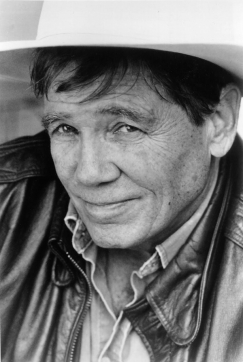
Very few people have the courage to state the obvious. Cultural historian Morris Berman is one of the lonely few – shouting into the dark, motivated only by his love for the truth. Berman is a brilliant thinker, thorough researcher, and wonderful writer. His trilogy of books on American decline is the subject of my new essay at Truthout – “America: What Happened? A Sneak Preview of the ‘Other’ Twilight Saga”. It is difficult to imagine a future in which historians do not dust off Berman’s books and conclude, “These explain what happened.” While everyone else was onanistically engaging in self-deception and fantasies of revolution, future historians will say, Berman had the intelligence, bravery, and values necessary to call it as he saw it and call it accurately.

Our lifestyle of endless hustling and rabid consumption, our cannibalistic individualism and narcissism, and our xenophobic and militaristic posture towards the rest of the world – all supported by both major political parties and the majority of the American people – has dug us a grave out of which we cannot climb.

My essay began as a review, but as a few readers have pointed out to me in emails, it turns into a manifesto for an alternative tradition and for detachment from the absurdity of the American political system as it is.

I have to take a moment to applaud and thank the Truthout staff for their courage. Several other “liberal” publications rejected the article for ideological reasons. One editor dismissed Berman as “sounding like a crank,” after admitting he had never read any of the books. Another editor asked me to rewrite the second half so that I would refute Berman’s argument and actually claim that America will come back better than ever. A third editor told me that I had no “historical awareness,” that Berman is nuts for claiming that his life in Mexico is happy – a good life in Mexico is nearly impossible, she argued, because of the drug cartels – and told me that the Occupy Movement, which no longer even seems to exist, is going to turn everything around. The Truthout staff deserves much respect for publishing the essay.

“America: What Happened?” is for starry-eyed realists who make the distinction between “hope” and “optimism” that Christopher Lasch elevated and defended. Optimism is a foolish belief in progress. Hope is the spiritual belief that even through collapse – even through cultural death – human goodness – a love and justice ethic – can occasionally emerge to make a difference.

Readers interested in Berman’s trilogy (Twilight of American CultureDark Ages America, Why America Failed) should also pick up his recent essay collection, A Question of Values. Regardless of where readers start, an investment in Berman is time and energy well spent. It will pay off in the forms of intellectual growth and clarity, and the improvement of life that results from the enlargement of the mind. It is certainly much better than being part of the delusional crowd clinging on to a weed growing out of the rock, believing it will hold and keep you from falling off the cliff.

I am happy and proud to be one of the few writers helping Berman get his tough, smart, and important message into the public mind.

What Are You Thinking?: An Open Letter to President Obama’s Supporters

Note: This letter also appeared on the political journal created and formerly edited by the late Alexander Cockburn, Counterpunch.

Dear President Obama’s Supporters,

I am writing this letter as a friend who believes in the same principles that you proudly trumpet: fairness, human rights, honesty, and communitarian commitment to the common interest and public good. Over the past three years, but especially during the past six months, I’ve grown increasingly bewildered over how you could support a President who routinely and flagrantly dishonors all of those principles. I remember our conversations during the horrific years of the Bush Presidency, and I recall how we spoke with shock and outrage over the crimes, abusive and exploitative policies, and sociopathic misdeeds of the Republican President. We were political allies – co-conspirators of democracy battling to bring peace, hope, and sanity to our country. Friendship supersedes politics, and regardless of what decision you make on Election Day, I will remain your friend if you will honor me with the same pledge. If you vote for Barack Obama, however, I am sorry to say that we will no longer be political allies. I fear that our priorities and values are so divergent that future association on political causes will no longer benefit either of us. You will have undermined your credibility on issues of the largest importance, and will therefore make political sympathy and cooperation impossible. I write this letter as a final effort to stop you from making a mistake that will cheapen your vote, degrade your politics, and hideously stain your principles. My words may be strong, but I write them with respect. If I didn’t respect you, I would not waste my time writing this letter. I ask only that you give the information I am about to present fair consideration and thoughtful deliberation. I ask that you vote for Jill Stein of the Green Party or Gary Johnson of the Libertarian Party or that you withhold your vote. Please do not give your vote to a man who has done nothing to deserve it and has, over the past four years, shown he possesses far less integrity and intelligence than you.

Everything I am about to describe is verifiable in a variety of credible sources. If you question the sources that I provide to support my claims, I encourage you to research the stories independently. I trust you will find that I have taken nothing out of context, I have made no distortion to the record, and I have made no attempt at manipulation. I have no reason to defame or impugn President Barack Obama.

In the 2008 Democratic Primary, I voted and volunteered for Hillary Clinton. She earned my support because of her greater experience, her greater resolve, and in my judgment, her greater intelligence. I also had a bad reaction – like the one you have when fumes of a foul odor slither into your nose – to the hysteria surrounding the Obama candidacy. Many of his most ardent supporters viewed him as if he was surrounded by a Messianic light, and that he rode into Washington D.C. sitting on a donkey, while crowds of adorers waved palm leaves to greet his arrival. I thought it was unhealthy to cast a mere mortal into the role of Savior. He had not earned such devotion. Unearned devotion builds an ego to megalomaniacal proportions. The result is often a personality cult that empowers the recipient of cultish fervor to do as he pleases, because the devotees will excuse, defend, rationalize, and justify any error or sin, no matter how severe or costly. The object becomes the advancement of the personality, and not the progression of a policy.

When the general election campaign season commenced, I set aside my concerns and not only vowed to vote for Barack Obama, but donated a small sum of money to his campaign, worked the phones to convince undecided voters in the state of Indiana to go Democrat, and drove disabled Obama voters to the polls. He was speaking beautifully in a populist and democratic tongue, and he was speaking eloquently in an inspired rhetoric that energized black voters, young voters, moderate voters, and disenchanted Republican voters in unprecedented numbers. On top of the promise of his presidency rested the reality of his candidacy. He was the first African-American candidate to win the nomination of his party, and if elected, he would be the first African-American president. When he defeated Senator John McCain with authority, Barack Obama shattered one of the highest glass ceilings in the world, and he did so with eloquence and intelligence far greater than many of his predecessors. In his cleverly crafted slogan and with powerful symbolism, he brought hope and change back to America.

After the election of John F. Kennedy, Gore Vidal wrote that “civilizations are rarely granted a second chance.” Following the Bay of Pigs debacle and the invasion of Vietnam, Vidal mourned that “something mysteriously went wrong.”

I wrote those same words about Vidal and Kennedy in a column for the November 12, 2008 edition of the Herald News in Joliet, Illinois where I wrote a weekly column for a little over a year. The Obama victory column would be my last. My final words for the column were hopeful – “Whether something mysteriously goes wrong during Obama’s administration remains to be seen, but this feels like a second chance, and right now, that feels like enough.”

Something went wrong – catastrophically wrong. It is not much of a mystery. The seemingly unsolvable conundrum is why so many people refuse to acknowledge the wreckage lying at their feet, and why so many people refuse to identify the man behind the handle of the wrecking ball.

Continue reading

Truthout Runs My Interview with Author and Middle East Expert Gregory Harms

I’m happy to call author Gregory Harms a friend. He is not only a good conversationalist and generous person, but he is also a formidable voice of reason and justice on American foreign policy, international relations, and the history and politics of the Middle East.

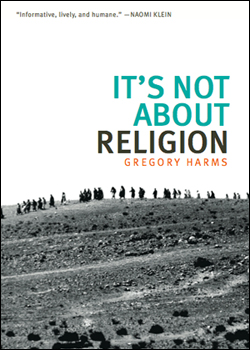
This week the news and commentary website Truthout, which also ran my essay on the ten year anniversary of the 9/11 attacks and ran a reprint of my tribute to Gore Vidal, is running an interview I conducted with Mr. Harms on the topic of his new book, It’s Not About Religion.

In the interview, Harms lays waste to much of the malicious lies and misguided perceptions about the Middle East, Islam, and the reasons many Arabs feel hostility towards the policies of the United States government. Readers will learn that Muslims are not frightening monsters hell bent on the destruction of all things American. They will also learn that much of the turmoil and tension in the Middle East is a direct result of American and Western policies, and that the tired expression “religion is the cause of all wars,” comes nowhere near reality.

Throughout the conversation, but more importantly, throughout Gregory’s brilliant and brave book, which I strongly recommend reading, he challenges the bigotry and aggression, that much to the pain of millions of people in the Middle East, dominates American political discussion of foreign policy and influences intervention abroad.

As I recall in my introduction to the interview, I met Mr. Harms at a bar called McBrody’s in Joliet, Illinois. We were reaching the wee hours of the morning, and Harms heard me make a positive remark about Neil Young. Harms agreed and incited a conversation , and a few years later, I’ve delighted in reading his three books (The Palestine-Israel Conflict, Straight Power Concepts in the Middle East, and the aforementioned It’s Not About Religion).

Anyone looking for truth to cut through the noise of the American media will experience the same pleasure and intellectual growth from reading his work. The new interview is a great place to start.

I’m particularly happy to have been associated with the interview, even if most of the insight in it comes from Harms, because Joe Macare, the editor of Occupied Chicago Tribune, gave it the highest praise imaginable. He called it a “middle finger to Sam Harris.”

New Essay at Front Porch Republic: The Dangerous Alliance of Big Government and Big Business

In the words of Kurt Vonnegut, I often feel like a “man without a country.” I’m at odds with much of American culture, and am strongly opposed to much of American politics. Front Porch Republic – a website founded by the excellent writer, and fellow Gore Vidal admirer, Bill Kauffman – is the closest thing I have to a political and philosophical home.  Their “about” page summarizes their mission and position well:

The economic crisis that emerged in late 2008 and the predictable responses it elicited from those in power has served to highlight the extent to which concepts such as human scale, the distribution of power, and our responsibility to the future have been eliminated from the public conversation. It also threatens to worsen the political and economic centralization and atomization that have accompanied the century-long unholy marriage between consumer capitalism and the modern bureaucratic state. We live in a world characterized by a flattened culture and increasingly meaningless freedoms. Little regard is paid to the necessity for those overlapping local and regional groups, communities, and associations that provide a matrix for human flourishing. We’re in a bad way, and the spokesmen and spokeswomen of both our Left and our Right are, for the most part, seriously misguided in their attempts to provide diagnoses, let alone solutions.

Though there is plenty we disagree about, and each contributor can be expected to stand by the words of only his or her own posts, the folks gathered here more or less agree with the above assertions. We come from different backgrounds, live in different places, and have divergent interests, but we’re convinced that scale, place, self-government, sustainability, limits, and variety are key terms with which any fruitful debate about our corporate future must contend.

Most of the Front Porch Republicans are more conservative than I am on a bevy of issues, but we all share a fundamental distrust in centralized power. A philosophical cousin of the Front Porch Republican movement is the Catholic subsidiarity theory of governance, which Robert Barron explains well in this video:

A regular reader of mine once asked me in an email to give a succinct statement of political philosophy. Although, it is not perfect, I answered back with this: I have a Christian concentration on the neighbor and the stranger. I oppose large, unaccountable entities, such as big government and big business, that are forms of concentrated and centralized power, which rob from the individual and community, dignity and autonomy.

I believe the federal government and Welfare State have a helpful and important role to play in the creation of a fair and just society. Like Robert Barron, I believe that local control, neighborhood action, and individual autonomy are the ideals, but that some tasks are so large and complex that governmental intervention is necessary. Health care is an instructive example here. It seems obvious that the most efficient and most humane way to distribute medicinal resources and services across a sizable population is with federal government involvement. Even with all of its flaws, senior citizens prefer Medicare to the private insurance scheme. Mitt Romney and Barack Obama’s ongoing wrestling match to emerge as the champion of Medicare indicates as much.

That being said, I reject the popular political distinction between big government and big business. They are flipsides of the same coin. Bureaucrats and billionaires are aligned in the destruction of human scale community. The useless Democratic and Republican debate, along with the antiquated liberal and conservative divide,  obfuscates this reality, and it is the central reality of American life.

I make this point in my new essay for Front Porch Republic called “The Dangerous Alliance of Big Government and Big Business.” The essay – my fifth for Front Porch – largely wraps up my political philosophy, undresses both political parties as equal offenders, and includes a reference to a properly functioning and benevolent institution – The Rolling Stones (the underrated populist anthem, “Salt of the Earth”):

To illustrate my indictment of big government and big business collusion, I use the examples of eminent domain, the bailouts for “too big to fail” banks, the Prison-Industrial Complex, and the individual mandate in the Affordable Care Act (Obamacare). I also refer to the “export of big government and big business collusion” that comes in the form of defense contractors, private army firms, and massive Pentagon funding. I could have added student loans to the list. What else could anyone call them? Colleges charge burglarizing rates for admission, requiring students to incur staggering amounts of debt from student loans. After universities get their money, the students not only pay the government, but must do so with interest. If they fail to comply, the government will destroy their credit and garnish their wages.

Most political conversations – whether they take place on the equally nauseating networks of Fox or MSNBC – have little relevance or meaning for the average American. With my new essay, I attempt to contribute to the creation of a real conversation. Front Porch Republic is committed to this cause, and I’m proud to be part of it.

Truthout Reprints My Tribute To Gore Vidal

Truthout, the popular news and politics website, has reprinted my eulogizing tribute to Gore Vidal. The essay – “The Love of Light: Gore Vidal, 1925 – 2012” – was originally published on PopMatters.

Gore Vidal, more than any other writer, influenced me to become a writer. As I make clear in the essay, I entered the life of writing with the firm belief that I would never be as good as Vidal, but that I could spend my life trying. Nearly ten years later, I’m still trying, and I still believe that such an effort is one of nobility and integrity.

Readers of Gore Vidal know that his talent and intelligence extended far beyond political analysis. In my essay, I spend a great deal of time talking about his most inventive novels – many of which had little or no political implications. Vidal is, however, for better and for worse, most famous as a historian and social critic.

In the weeks since his death, I’ve found myself longing for Vidal’s brilliant, tough, and funny voice. I’d like to hear him turn his weaponry of wit and wisdom against the insanity of the current Presidential election, and I’d like to hear his insights – memorable and provocative to be sure – on the visible decline and decay of American civilization that he predicted throughout his career.

PopMatters has a smart audience drawn to its cultural commentary. I’m grateful for my post as PopMatters columnist, but I am also glad that Truthout – a website dedicated solely to politics – has reprinted the essay. I hope that the essay will encourage the Truthout audience to take accurate measure of the loss American political culture suffers in the absence of Gore Vidal.

The title of my essay, “The Love of Light,” comes from his extraordinary historical novel Julian:

“The spirit of what we were has fled. With Julian, the light went, and now nothing remains but to let the darkness come, and hope for a new sun and another day, born of time’s mystery and man’s love of light.”


I Interview Best Selling Author and Noir Master James Lee Burke

James Lee Burke is one of the best writers in America, and one of the true masters of the crime novel. His stories about homicide detective and recovering alcoholic Dave Robicheaux, set in New Orleans and New Iberia, along with his books about Texas Sheriff Hackberry Holland, effortlessly weave noir, mysticism, and politics to present a panoramic view of the American flesh and the human spirit. The genre in which he casts his seductive spell may be crime, but his masterful prose and penetrating insight elevate his work far beyond any genre, making him a literary treasure.

I discovered James Lee Burke after watching the film In The Electric Mist, starring Tommy Lee Jones as Dave Robicheaux, and based on Burke’s novel, In The Electric Mist with the Confederate Dead. Within days, I was reading Burke’s books, and since then, I’ve devoured much of his bibliography. I’ve also enjoyed listening to a few of the books on CD. The narration of Will Patton, who has starred in such movies as The Client, The Postman, and Brooklyn’s Finest, makes Burke’s soaring prose seem as if it was written for the stage, and not the page.

I recently had the pleasure and privilege of talking on the phone with Burke for an hour and twenty minutes. Writers often acquire the reputation of being reclusive, inhospitable, and cantankerous. Burke, however, was a largehearted gentleman. Our conversation ran well over the thirty minutes arranged by his publisher, and much of that was due to his genuine interest in my interpretation of his work and my ideas regarding its dominant themes. The final twenty minutes of our discussion involved a role reversal in which he asked me questions about my work and my life.

Burke’s work is important, because it is high quality literature. Excellence and greatness provide their own justification. Anyone who reads the soul-stirring, thought-provoking, and heart-pounding stories of Burke will intuitively understand how he fulfills the calling of the artist and strengthens his medium.

There is another component of importance to Burke’s novels, however, and it centers on the unique vision of life – especially American life – he brings to bear on modernity. The American Empire is collapsing, and the American economy is crashing. Burke surveys his surroundings, and righteously responds with a Leftist Christianity that, somehow without paradox, blends realism with mysticism. His voice is one calling for justice in the face of widespread exploitation of the poor, the environment, and weak by the powerful forces of greed, cruelty, and iniquity.

The Los Angeles Review of Books – a fine literary publication – allowed Burke and me to explore his career, philosophy, and vision of America by taking a journey into what I call the “noir mystic.” Asking Burke good questions was easy. Reading his work sharpens the mind. Burke’s answers make the interview, titled “Into The Noir Mystic: A Conversation about Injustice, Evil, and Redemption with James Lee Burke”, essential reading. In addition to his own work, we discuss how the U.S. government – at the state and federal levels – has become a distributor of vice, war, Christianity, the increasingly hostile character of American life, and the loss of “Edenic America.”

My “Must Read” Book List for the Presidential Election Season

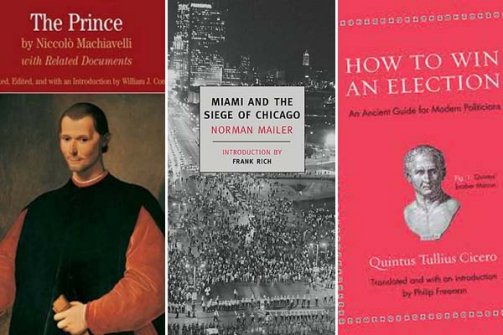
Today the Daily Beast is allowing me to force my tastes on the masses. I’ve written an annotated list of my top ten books for the Presidential election season. The list includes three of my favorite authors – Norman Mailer, David Foster Wallace, and Gore Vidal, who I recently eulogized for PopMatters.

One of the reasons I enjoy writing about pop culture and literature is that it enables me to introduce unpopular political or philosophical ideas into mainstream discussion.

The overarching theme of my Daily Beast article, and the dominant theme of all the books I’ve chosen for inclusion, is that Presidential politics is a ghastly and fraudulent spectacle of stagecraft in which personality dramas, public relations, and image branding silence and defeat discussion of the issues most important to the lives of the American people. It is often difficult to enter such an unforgiving critique into political debate, but with the usher of pop culture and/or literature, it can happen.

The main reason I’ve selected all of the books on the list, however, is that they are valuable and insightful works of art or research that elevate their respective genres to new standards of excellence. Everyone, regardless of ideology or level of political passion, could benefit from reading great books.