New Essay for The Atlantic – “The Real Problem With Hooking Up: Bad Sex”

The dominance of the market and utilitarianism over American culture has created a sexual lifestyle that rejects risk, intimacy, and depth. It has removed the fun and adventure from sex, and turned even casual sex with a new partner into a boring, mechanical, and idiotic experience. I’ve suspected that “hookup culture” is destructive to good sex after observing how little college students flirt, and after listening to some of the guarded, but honest comments students make about their sex lives.

Donna Freitas confirms my suspicions in her new book, The End of Sex. She conducted thousands of interviews to research her subject, and she determined, based on students’ own words, that hookup culture leads to bad and boring sex that leaves its participants unfulfilled at all levels.

In a new essay for The Atlantic, I review her book and give my own insight into hookup culture. The book review and essays allows me to put forward an argument that I’ve been making for a long time –  “The most lamentable aspect of hookup culture is not, as some social conservatives would argue, that it will lead to the moral decay of a modern Sodom and Gomorrah, but that it is so boring.”

hookup_culture_mIn a culture caught between puritanism and pornography, Freitas offers a third way to sexual independence and autonomy. It is a way for those of us who believe that conversation is often the best foreplay, moments of tenderness are more memorable than animalistic orgasms had without thought or emotion, and as I put it in the article, “The electrifying mystery of romance is powered by the surge of a smile from a stranger across the room, the heat generated by hands on an unfamiliar set of hips on the dance floor, and the sweet synchronicity of flirtation.”

New Essay for The Indianapolis Star – The Reason Behind the Cost of Higher Education and The Fight Against It

The Indianapolis Star has run my new essay on the reasons behind the absurd and paralytic costs of higher education. In the op-ed piece, I indict and condemn the venal, corrupt, and cruel system of higher education in America, calling it a “lucrative playground for tenured faculty, many of whom make well over $100,000 per year for teaching two or three courses a semester, and administration, whose mysterious duties and invisible tasks earn some of them annual salaries over $200,000.”

As I explain in the article, multiple studies have connected “administrative bloat” with the exorbitant increases in college tuition. University employees are enriching themselves, while they scam students and their families, and pay adjunct instructors miserly wages for carrying the same work loads as their tenured peers. They pull off the heist all while congratulating themselves for advocating “social justice,” “diversity”, and “multiculturalism.”

The cost of higher education leaves countless young people paying off heavy debts for their entire lives. It has become one of the most important factors in the lives of millions of Americans, yet no major political figure or media commentator tackles the problem. Mitch Daniels, former governor of Indiana and current president of Purdue, has broken the trend of complacency, by announcing a tuition freeze and promising to cut the Purdue budget by $40 million. My article summarizes the situation and places the issue in its proper context. I call the Daniels story one of the most important in America.

bildeOn an interesting side note, I pitched the story to several other major publications – news and culture magazines, left wing websites, and right wing websites – but everyone passed. I’d like to thank The Star for its courage in spotlighting the story. It seems that issue of student debt is not yet on the nation’s radar. To put it simply, most people don’t care, but when the student loan bubble pops, everyone will be wondering what happened and why no one tried to stop it. The bleak outlook of the future is why Daniels’ new crusade is so important.

Front Porch Republic Runs an Excerpt from Against Traffic

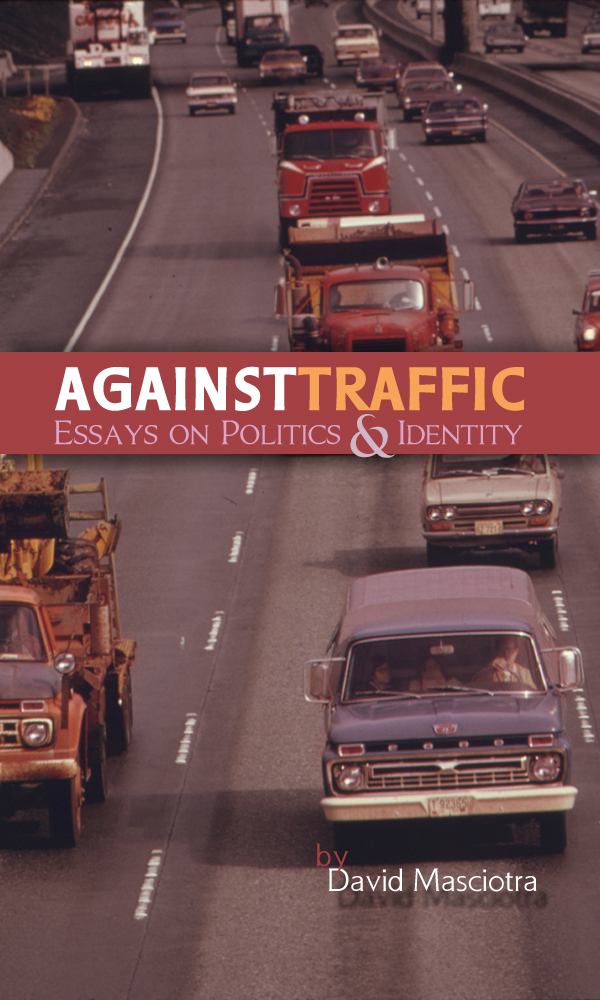
The always excellent Front Porch Republic has posted an excerpt from my new ebook, Against Traffic: Essays on Politics and Identity, called “Deleting The Individual: Big Data and Presidential Campaigns.” The excerpt is a good introduction to the collection of essays.

Against_Traffic_book_cover

New Essay at The Daily Beast – “Where’s The Faith? Try Crime Novels”

In the fall, at the University of St. Francis, I will teach a course on crime literature and film noir. Too long relegated to the ghetto of “genre”, noir actually possesses deep and profound insights into human nature. Novelist James Lee Burke, the greatest contemporary practitioner of noir, said in an interview I conducted with him that he uses the word “noir” to capture a “Darwinian world in which all the parameters that we convince ourselves we obey and to which we conform have no existence at all.”

In my new essay for The Daily Beast, “Where’s The Faith? Try Crime Novels”, I write that “Crime and noir have always told the story of people who decide to cross an invisible but palpable moral line. It then measures the wreckage—physical, emotional, and spiritual—that results from the voluntary crossing over into another ethical universe—a colder, tougher, and uglier universe. These same questions haunt the tales of the Bible and the lives of the saints.”

OUT OF THE PAST / BUILD MY GALLOWS HIGHOne of my many intellectual obsessions is noir. Philosophically and stylistically it manages to capture the depths (depravity, weakness to temptation, lust for power, greed, and sex) and heights (heroism, enforcement of moral codes) of human nature through its tough themes and Jungian interplay of shadow and light.

In “Where’s The Faith?” I I weigh in on the ongoing literary discussion of whether or not God is dead in contemporary American literature. I submit that the most engaging and compelling themes of religion, spirituality, and morality are to be found in crime literature, especially that of Walter Mosley, Michael Connelly, and above all, James Lee Burke. The essay contains a quote from Burke that I obtained in an email interview for the article, and it offers new perspective on a smoldering literary debate.

Major Announcement: New Ebook now available on Amazon – “Against Traffic: Essays on Politics and Identity”

Readers who have followed my work since the publication of my first book, Working On a Dream: The Progressive Political Vision of Bruce Springsteen (Continuum Books), in 2010 have likely noticed that my politics have shifted in various directions. The role of any thoughtful and thinking person must include closely observing new developments in history, politics, and sociology, obtaining new information and insights, and adapting accordingly. Citizenship requires the citizen to always move like a quarterback in a scramble – ducking and dodging oncoming opponents, reacting with agility and speed to changes in the play, and remaining steadfast in the commitment to advancing one’s priorities and purpose.

In my new collection of essays, Against Traffic: Essays on Politics and Identity, I write about my own personal and political development, and how I escaped from the enclosed ideological cell of big government liberalism to find the free territory of individual freedom, neighborhood empowerment, and communal enlivenment. The new and exclusive title essay deals with the events that shaped my politics, and shows how I became a proponent of what Norman Mailer called “Left Conservatism.” I now take equally from the left and right, and I criticize both left and right – in the process claiming the inspiration of figures as diverse in range as Cornel West, Bob Dylan, Albert Camus, Gore Vidal, Stanley Hauerwas, Pope Benedict, and the aforementioned Norman Mailer. The new collection of essays demonstrates how a strong individual can move against traffic – creating one’s own identity and using one’s own intellect, heart, and spirit as cartographer.

Against_Traffic_book_coverMost of Against Traffic is new material – the grand title essay and an introduction, but the book also includes my previously published letter challenging President Obama’s supporters, and my previously published essays on the death of American Empire, and the “dangerous alliance of big business and big government.” It closes with my eulogy celebrating the life and career of Gore Vidal.

The description on Amazon is as follows:

Against Traffic: Essays on Politics and Identity is a compelling and provocative collection essays from one of America’s most versatile and forceful young writers. David Masciotra, who writes about pop culture for PopMatters, literature for the Daily Beast, politics for Front Porch Republic, and religion for Relevant, turns his clear eyes, powerful intellect, and large imagination toward the fiasco of American politics. What follows is a blistering attack on the clichés of the left and right, and the superficiality, tribalism, and frivolity of the American political scene.

In the title essay, Against Traffic, Masciotra takes readers through his deeply personal and political travels from the ideological trap of big government liberalism to the open ground of neighborhood empowerment, communal enlivenment, and what Norman Mailer called “Left Conservatism.” The essay also deals with the importance of literature, the arts, existential Christianity, and localism in the formulation of an edifying politics, citing figures as diverse as Albert Camus, Cornel West, Gore Vidal, and Pope Benedict.

Masciotra shoots through the delusions of most pundits by indicting both big government and big business. President Obama, the liberals who have defended his disastrous policies, and the Republican Party are all undressed as equally culpable in the destruction of the American community and family. The political solution that Masciotra offers will surprise and please anyone concerned about the maximization of freedom and the empowerment of the everyday person.

Against Traffic: Essays on Politics and Identity not only issues brilliant commentary on American politics, but also examines how independence, rebellion, and liberty are possible in an American culture committed to groupthink, party loyalty, and conformity.

Against Traffic, which in addition to the grand title essay includes an open letter challenging President Obama’s supporters, an examination of the death of the American Empire, an exploration of the “dangerous alliance between big business and big government”, and a eulogy celebrating the life and career of Gore Vidal, is a must read book for Americans fighting to free themselves from the shackles of America’s dysfunctional, and often diabolical, political system and culture.

It is a unique work of insight into how Americans can resist the restrictions of American politics, and live with strength, courage, and conviction.

Buy it now

New Column at PopMatters – Queen of Disco: The Legend of Sylvester

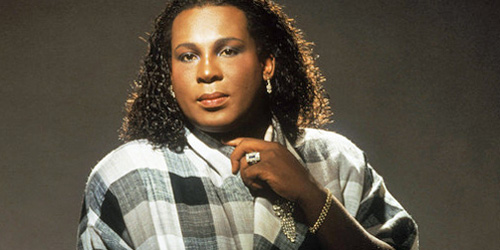
My new February column at PopMatters takes a biographical and analytical look at the life and career of Sylvester.

Sylvester was one of America’s greatest singers, and he, unfortunately, remains one of American music’s best kept secrets. He came up through the church and infused all his music with a gospel fire – from disco to jazz; from rock to soul.

subtlesubversion-sylvesterjames-500As mush as his music offers listeners enjoyment, his life offers Americans insight into courage, creativity, and integrity. Sylvester was flamboyantly gay, but did not quite fit into the gay minority. He was a transvestite, but did not quite fit into the transvestite minority. He was black, but did not quite fit into the black minority. He was a Christian, but did not quite fit into any Christian minority. He certainly never fit into any majority.

My new column – “Queen of Disco: The Legend of Sylvester” – tells the fascinating and moving story of Sylvester. Anyone interested in American music, unorthodox Christianity, or the development of social progress since the 1970s, should read it.

I discovered Sylvester’s music after watching a documentary on his life aired by the television network, TVOne. I’ve long been a fan of Prince, and after hearing Sylvester sing, scream, and shout in his trademark falsetto, I realized that Prince had been ripping off Sylvester’s vocal style for decades. Because of the obscurity of Sylvester, Prince was able to successfully pull of the heist, and escape from the scene of the crime, undetected.

A reader who follows some of my writing emailed me with surprise and confusion over where Sylvester fits into my musical palette. He seems like an unlikely choice thrown into the mix with John Mellencamp, Warren Haynes, and Bob Seger, but the most resonant lesson of Sylvester’s life is that an interesting person – and a good life – evades category.

Sylvester’s spirit spoke to me, and with a voice as beautiful and big as his, who could resist?

I Interview Guitar God, Soul Hero, Blues Master, and Rock Legend Warren Haynes

Without any embarassment, I will quote myself – “Warren Haynes is the greatest living practitioner of blues-based, soul-inspired rock ‘n’ roll music. I’ll stand on the kitchen table of Mick Jagger, Eric Clapton, or Bruce Springsteen and stomp and shout it if one of them will invite me over for dinner.”

That was my lead into my first interview with Warren Haynes, conducted and published just under a year ago. We discussed his stunning solo album, Man In Motion, soul music, and living with dedication to artistry and creativity.

I took an unconventional route of discovery to the vast body of work that makes up Warren Haynes’ accomplished career. I first met his music as a solo artist. Man In Motion and Tales of Ordinary Madness have become two of my favorite albums, and after seeing Haynes put on a virtuoso live performance, and reviewing that performance, I started diving into the recent work of The Allman Brothers – on which he plays guitars and often sings – and the catalogue of Haynes’ own band, Gov’t Mule.

It is his latest release with Gov’t Mule that is the topic of discussion in my new interview with Haynes. Gov’t Mule has put out a new box set of complete live shows from their first tour in 1996.

warren-haynes-87ba39304c8e15d2

In the interview, “Getting Away with Murder: A Conversation with Warren Haynes”, Haynes and I also discuss the future of music, timeless music, jazz, and his frienship with Derek Trucks.

In addition to being an extraordinary singer, songwriter, and musician, Haynes is also a fun and fascinating conversationalist. He has an easy, but insightful style of communication that both provokes thought and invites engagement. It was my pleasure to speak with him, and its been my pleasure to listen to him music.

New Feature at The Daily Beast – “The Jesus Novels”

James Lee Burke said when I interviewed him, “Find a metaphysical story you like and stick with it.” I like the story of Jesus and I’m sticking with it. As much as it sustains, empowers, and inspires me, I often find fault with the Biblical rendering of the narrative. Norman Mailer had the same criticism, claiming that the story of the Christian Messiah simultaneously living as God and man was indeed the “greatest story ever told”, but that it was not told in the “greatest way.” Mailer’s Jesus novel, The Gospel According to the Son, in which Jesus tells his story in the first person is a book that I turn to more than the Synoptic Gospels. It is a book of mystery, majesty, and magic.

My newest feature for the Daily Beast is a short run down of some of the best and most interesting Jesus novels. I offer barely more than summary of each book, but the article gives a good introduction to readers looking to read the Jesus story as shaped by the delicate hand of the novelist. In addition to Mailer, I give Fulton J. Sheen, Anne Rice, and Nikos Kazantzakis the most praise. Deepak Chopra is not much of a novelist, but I also compliment his surprising, insightful, and unconventional effort of speculation on Jesus’ teenage years and twenties.

Jesus NovelsChristians looking for a reminder of the Jesus story’s power will find any of these novels a good place to start, and nonbelievers will also enjoy them. As I point out in the article, the Jesus novels provide “artistic means of accessing a tale containing all of the most effective tools of drama—pity, terror, sadness, heroism, tragedy, and redemption.”

November PopMatters Column – Takin’ It Easy For Us Sinners: The Dude and Jesus Christ

The Big Lebowski has become a true pop cultural phenomena across the world. Although the Cohen Brothers comic neo-noir did not achieve financial success at the box office upon release, it has acquired a massive following from millions of people, many of whom approach the movie and its protagonist – The Dude – with a healthy zealotry.

The movie is fun and funny, but it also contains deep and profound insights into many of the problems of American culture and Western capitalism, while it projects a Zen and, as I show in my new column for PopMatters, radically Christ-like alternative to American culture and Western capitalism.

No one understands the value and meaning of The Big Lebowski, that includes but goes beyond comic relief, better than Oliver Benjamin. Oliver is a brilliant author, entrepreneur, and philosopher who founded a religion called Dudeism. Dudeism encourages people to conduct their lives according the disorganized tenets of the Dude’s lifestyle. To many readers, this may sound amusing, but Oliver will provoke the mind and stir the soul with his usage of The Dude as a predicate for the advocacy of a freer and more peaceful life in which material goods do not take priority over spiritual contentment and emotional fulfillment.

I’ve written for the official website of Dudeism twice, and I also appear in an upcoming documentary on Oliver Benjamin and Dudeism (Directed by Italian filmmaker Thomas Fazi). Our most recent collaboration is on the book, Lebowski 101: Limber-minded Investigations into the Greatest Story Ever Blathered. The entertaining and enlightening book contains chapters written by different writers who philosophically examine some aspect of the classic movie.

I write a chapter identifying and interpreting the similarities between Jesus Christ and The Dude. Through quoting of scripture and recitation of commonly understood Biblical principles, I demonstrate that Jesus of Nazareth was an original Dude, and that Lebowski of Los Angeles, although not a practicing Christian,  is, in his own way and according to his own internal system of ethics, a practitioner of Jesus’ way and life. PopMatters has run my contribution to Lebowski 101 as my November column.

The essay also shows how orthodox Christianity, when properly understood, is radically opposed to American orthodoxy of exceptionalism, aggression abroad, and greed at home.

Too much pop culture references are done solely for the entertainment derived from ironic inside jokes. Oliver Benjamin, with Dudeism, has created a fun means of using pop culture to investigate serious issues of politics and philosophy. For that he deserves applause and respect, and for that reason, I’m happy to be a Christian Dudeist.

The Harmony: My Speaking Event at the University of Wisconsin

Dr. Craig Werner is a professor of African-American Studies at the University of Wisconsin who was written several books – two of which are essential to understanding the power of black music in American life: A Change is Gonna Come: Music, Race, and the Soul of America and Higher Ground: Stevie Wonder, Curtis Mayfield, and the Rise and Fall of American Soul.

Most of the courses he teaches are about black music and African-American literature, but right now he is offering a seminar on the music of Bob Dylan and Bruce Springsteen. Dr. Werner recently read my book, Working On a Dream: The Progressive Political Vision of Bruce Springsteen, along with the handful of articles I’ve written about Bob Dylan’s too often overlooked Christian music. He invited me to visit Madison, Wisconsin and speak to his students.

I was thrilled to accept the invitation. I arrived in Madison on Monday November 12th, and met with Dr. Werner for drinks at a local blues club called The Harmony Bar and Grill. After getting to know each other much of our conversation focused on the problems that result from contemporary culture’s insistence on compartmentalizing the human condition. There is a self-defeating tendency to separate the mind, body, and spirit into three independent entities when a realistic view of life and a healthy approach is to understand that the soul and the intellect – the spiritual and the sexual – are always interconnected. Life is at its best – its most terrifying and thrilling – when the interplay is at its most intense.

Dr. Werner’s book A Change is Gonna Come explains and articulates this idea with the predicate of black music in a way that provides new understanding, insight, and clairvoyance. In jazz, blues, and soul – from Ray Charles to Mary J. Blige – there exists the exercise of what Werner calls the “gospel impulse.”

Bruce Springsteen and Bob Dylan are rare in that they are white artists who imbue their work with the gospel impulse, and that they both submit everything to an ongoing process of sacralization. Springsteen often takes concepts from the Catholicism of his childhood and simply removes the capital letter. The phrase “sanctity of life” comes from the Catholic church, but Springsteen transforms the phrase into a catholic principle by making the body sacred, friendship sacred, community sacred, and sexuality sacred. The socio-spiritual quality of Bob Dylan’s Christian music – songs that divide between angry gospel and love songs to God – shows the same inspired and inspirational determination.

During my visit with the students I explained that one of the functions of great writers – whether they are working with a guitar or a notebook, a keyboard or a keypad – is to take something that everyone is thinking about and articulate it with a language that allows everyone to realize they’ve been thinking about it and then go out and talk about it.

Werner’s writing on the gospel impulse does exactly that. He defines it as “the belief that life’s burdens can be transformed into hope and salvation. It is the promise of redemption.” He goes on to elaborate:

At its best, the gospel impulse helps people experience themselves in relation to rather than on their own.  Gospel makes the feeling of human separateness, which is what the blues are all about, bearable.  It’s why DJs and the dancers they shape into momentary communities are telling the truth when they describe dance as a religious experience.

The gospel impulse half-remembers the values brought to the new world by the men and women uprooted from West African cultures:  the connection between the spiritual and material worlds; the interdependence of self and community; the honoring of the elders and the ancestors; the recognition of the ever-changing flow of experience that renders all absolute ideologies meaningless….

The gospel impulse consists of a three-step process:  (1) acknowledging the burden; (2) bearing witness; (3) finding redemption. The burden grounds the song in the history of suffering that links individual and community experiences….We don’t choose our burdens; we do choose our responses.

Musicians grounded in the gospel impulse respond by bearing witness to the troubles they’ve seen, telling the deepest truths they know….The word “witness” works partly because the burden involves history, power.  There’s an evil in the world and…lots of it comes from the Devil.  Call him sex or money, hypocrisy or capitalism, the landlord or Governor Wallace, but the Devil’s real.  You deal with him or he, maybe she, will most definitely deal with you…Gospel promises, or at least holds out the possibility, that tomorrow may be different, better…Whatever its specific incarnation, gospel redemption breaks down the difference between personal salvation and communal liberation.  No one makes it alone.  If we’re going to bear up under the weight of the cross, find the strength to renounce the Devil, if we’re going to survive to bear witness and move on up, we’re going to have to connect.  The music shows us how.

Without planning on it when I originally received the invitation to speak at the University of Wisconsin, I was able to add my own ornamentation to the tree that Werner built for his students. I played the Springsteen song “Human Touch” and discussed how, in the school of Al Green and Marvin Gaye, Springsteen presents sexuality as a sanctuary from a troubled world. It is not only physically stimulating, but also spiritually edifying. It is sacred – not a hedonistic tool used for manipulation that goes toward conquering another person for the purposes of your own pleasure nor a sacrifice made on the altar of a church’s doctrinal demand.

I also played “Shot of Love” by Bob Dylan and explained how it represents and expresses a form of spiritual combat. Surrounded by sin and social injustice, Dylan cries out that he needs a “shot of love” rather than submitting to the pressure to conform to a materialistic order or fighting fire with fire by engaging in the same kind of hate and hostility that he condemns. He has faith in God, but he isn’t optimistic: “What I got ain’t painful / It’s just bound to kill me dead / Like the men who followed Jesus when they put a price upon his head.”

I once watched Dr. Cornel West explain at St. Sabina Church on the southside of Chicago how listening to certain forms of music – blues, gospel – can make you a better person. I believe that is true, because I’m a product of it.

Conversation can also make us better – intellectually, spiritually, and morally. Dr. Werner’s contribution to a national conversation, and his inclusion of me in it, has made me better. I hope that my contribution to the conversation in his classroom has made his students better.