Without any embarassment, I will quote myself – “Warren Haynes is the greatest living practitioner of blues-based, soul-inspired rock ‘n’ roll music. I’ll stand on the kitchen table of Mick Jagger, Eric Clapton, or Bruce Springsteen and stomp and shout it if one of them will invite me over for dinner.”
That was my lead into my first interview with Warren Haynes, conducted and published just under a year ago. We discussed his stunning solo album, Man In Motion, soul music, and living with dedication to artistry and creativity.
I took an unconventional route of discovery to the vast body of work that makes up Warren Haynes’ accomplished career. I first met his music as a solo artist. Man In Motion and Tales of Ordinary Madness have become two of my favorite albums, and after seeing Haynes put on a virtuoso live performance, and reviewing that performance, I started diving into the recent work of The Allman Brothers – on which he plays guitars and often sings – and the catalogue of Haynes’ own band, Gov’t Mule.
It is his latest release with Gov’t Mule that is the topic of discussion in my new interview with Haynes. Gov’t Mule has put out a new box set of complete live shows from their first tour in 1996.
In addition to being an extraordinary singer, songwriter, and musician, Haynes is also a fun and fascinating conversationalist. He has an easy, but insightful style of communication that both provokes thought and invites engagement. It was my pleasure to speak with him, and its been my pleasure to listen to him music.
James Lee Burke said when I interviewed him, “Find a metaphysical story you like and stick with it.” I like the story of Jesus and I’m sticking with it. As much as it sustains, empowers, and inspires me, I often find fault with the Biblical rendering of the narrative. Norman Mailer had the same criticism, claiming that the story of the Christian Messiah simultaneously living as God and man was indeed the “greatest story ever told”, but that it was not told in the “greatest way.” Mailer’s Jesus novel, The Gospel According to the Son, in which Jesus tells his story in the first person is a book that I turn to more than the Synoptic Gospels. It is a book of mystery, majesty, and magic.
My newest feature for the Daily Beast is a short run down of some of the best and most interesting Jesus novels. I offer barely more than summary of each book, but the article gives a good introduction to readers looking to read the Jesus story as shaped by the delicate hand of the novelist. In addition to Mailer, I give Fulton J. Sheen, Anne Rice, and Nikos Kazantzakis the most praise. Deepak Chopra is not much of a novelist, but I also compliment his surprising, insightful, and unconventional effort of speculation on Jesus’ teenage years and twenties.
Christians looking for a reminder of the Jesus story’s power will find any of these novels a good place to start, and nonbelievers will also enjoy them. As I point out in the article, the Jesus novels provide “artistic means of accessing a tale containing all of the most effective tools of drama—pity, terror, sadness, heroism, tragedy, and redemption.”
The massacre in Newtown was one of the most heartbreaking turn of events in recent American history. It was also one of the most evil – even prisoners possess a strong hatred for people who target children for violence.
The shooting should have provoked a wide ranging conversation on political, social, and cultural issues. Instead, the media and President Obama have overwhelmed the fallout with a single minded focus and emphasis on gun control.
More gun control would have done little or nothing to prevent Adam Lanza from killing 27 people on December 14, 2012. Lanza could not legally purchase a gun. He knew that, and he stole guns legally purchased by his mother – all of which were legal when the assault weapons ban existed. The gun, however, is an easy target for discussion because it allows Americans to exercise the futile and fatal conceit of control. Let’s “do something” is the chorus call, and what is the easiest thing to do? Pass more gun laws. Nevermind that gun laws were more lenient in the 1970s, but there were fewer school shootings in that decade or that violent crime, overall, has declined consistently over the past twenty years.
Adam Lanza deserves the blame for the murders he committed. It also seems fair and reasonable to ask serious questions about his parents – Why didn’t his father speak to him for several years? Was this abandonment? Why did his mother train him to shoot guns? Why did she leave him unaccompanied and unsupervised for days at time so that she could vacation?
Obsessing over the gun not only allows Americans to grasp at the easiest of answers and solutions, but it reinforces their fixation on technology.
The Big Lebowski has become a true pop cultural phenomena across the world. Although the Cohen Brothers comic neo-noir did not achieve financial success at the box office upon release, it has acquired a massive following from millions of people, many of whom approach the movie and its protagonist – The Dude – with a healthy zealotry.
The movie is fun and funny, but it also contains deep and profound insights into many of the problems of American culture and Western capitalism, while it projects a Zen and, as I show in my new column for PopMatters, radically Christ-like alternative to American culture and Western capitalism.
No one understands the value and meaning of The Big Lebowski, that includes but goes beyond comic relief, better than Oliver Benjamin. Oliver is a brilliant author, entrepreneur, and philosopher who founded a religion called Dudeism. Dudeism encourages people to conduct their lives according the disorganized tenets of the Dude’s lifestyle. To many readers, this may sound amusing, but Oliver will provoke the mind and stir the soul with his usage of The Dude as a predicate for the advocacy of a freer and more peaceful life in which material goods do not take priority over spiritual contentment and emotional fulfillment.
I write a chapter identifying and interpreting the similarities between Jesus Christ and The Dude. Through quoting of scripture and recitation of commonly understood Biblical principles, I demonstrate that Jesus of Nazareth was an original Dude, and that Lebowski of Los Angeles, although not a practicing Christian, is, in his own way and according to his own internal system of ethics, a practitioner of Jesus’ way and life. PopMatters has run my contribution to Lebowski 101 as my November column.
The essay also shows how orthodox Christianity, when properly understood, is radically opposed to American orthodoxy of exceptionalism, aggression abroad, and greed at home.
Too much pop culture references are done solely for the entertainment derived from ironic inside jokes. Oliver Benjamin, with Dudeism, has created a fun means of using pop culture to investigate serious issues of politics and philosophy. For that he deserves applause and respect, and for that reason, I’m happy to be a Christian Dudeist.
Dr. Craig Werner is a professor of African-American Studies at the University of Wisconsin who was written several books – two of which are essential to understanding the power of black music in American life: A Change is Gonna Come: Music, Race, and the Soul of America and Higher Ground: Stevie Wonder, Curtis Mayfield, and the Rise and Fall of American Soul.
I was thrilled to accept the invitation. I arrived in Madison on Monday November 12th, and met with Dr. Werner for drinks at a local blues club called The Harmony Bar and Grill. After getting to know each other much of our conversation focused on the problems that result from contemporary culture’s insistence on compartmentalizing the human condition. There is a self-defeating tendency to separate the mind, body, and spirit into three independent entities when a realistic view of life and a healthy approach is to understand that the soul and the intellect – the spiritual and the sexual – are always interconnected. Life is at its best – its most terrifying and thrilling – when the interplay is at its most intense.
Dr. Werner’s book A Change is Gonna Come explains and articulates this idea with the predicate of black music in a way that provides new understanding, insight, and clairvoyance. In jazz, blues, and soul – from Ray Charles to Mary J. Blige – there exists the exercise of what Werner calls the “gospel impulse.”
Bruce Springsteen and Bob Dylan are rare in that they are white artists who imbue their work with the gospel impulse, and that they both submit everything to an ongoing process of sacralization. Springsteen often takes concepts from the Catholicism of his childhood and simply removes the capital letter. The phrase “sanctity of life” comes from the Catholic church, but Springsteen transforms the phrase into a catholic principle by making the body sacred, friendship sacred, community sacred, and sexuality sacred. The socio-spiritual quality of Bob Dylan’s Christian music – songs that divide between angry gospel and love songs to God – shows the same inspired and inspirational determination.
During my visit with the students I explained that one of the functions of great writers – whether they are working with a guitar or a notebook, a keyboard or a keypad – is to take something that everyone is thinking about and articulate it with a language that allows everyone to realize they’ve been thinking about it and then go out and talk about it.
Werner’s writing on the gospel impulse does exactly that. He defines it as “the belief that life’s burdens can be transformed into hope and salvation. It is the promise of redemption.” He goes on to elaborate:
At its best, the gospel impulse helps people experience themselves in relation to rather than on their own. Gospel makes the feeling of human separateness, which is what the blues are all about, bearable. It’s why DJs and the dancers they shape into momentary communities are telling the truth when they describe dance as a religious experience.
The gospel impulse half-remembers the values brought to the new world by the men and women uprooted from West African cultures: the connection between the spiritual and material worlds; the interdependence of self and community; the honoring of the elders and the ancestors; the recognition of the ever-changing flow of experience that renders all absolute ideologies meaningless….
The gospel impulse consists of a three-step process: (1) acknowledging the burden; (2) bearing witness; (3) finding redemption. The burden grounds the song in the history of suffering that links individual and community experiences….We don’t choose our burdens; we do choose our responses.
Musicians grounded in the gospel impulse respond by bearing witness to the troubles they’ve seen, telling the deepest truths they know….The word “witness” works partly because the burden involves history, power. There’s an evil in the world and…lots of it comes from the Devil. Call him sex or money, hypocrisy or capitalism, the landlord or Governor Wallace, but the Devil’s real. You deal with him or he, maybe she, will most definitely deal with you…Gospel promises, or at least holds out the possibility, that tomorrow may be different, better…Whatever its specific incarnation, gospel redemption breaks down the difference between personal salvation and communal liberation. No one makes it alone. If we’re going to bear up under the weight of the cross, find the strength to renounce the Devil, if we’re going to survive to bear witness and move on up, we’re going to have to connect. The music shows us how.
Without planning on it when I originally received the invitation to speak at the University of Wisconsin, I was able to add my own ornamentation to the tree that Werner built for his students. I played the Springsteen song “Human Touch” and discussed how, in the school of Al Green and Marvin Gaye, Springsteen presents sexuality as a sanctuary from a troubled world. It is not only physically stimulating, but also spiritually edifying. It is sacred – not a hedonistic tool used for manipulation that goes toward conquering another person for the purposes of your own pleasure nor a sacrifice made on the altar of a church’s doctrinal demand.
I also played “Shot of Love” by Bob Dylan and explained how it represents and expresses a form of spiritual combat. Surrounded by sin and social injustice, Dylan cries out that he needs a “shot of love” rather than submitting to the pressure to conform to a materialistic order or fighting fire with fire by engaging in the same kind of hate and hostility that he condemns. He has faith in God, but he isn’t optimistic: “What I got ain’t painful / It’s just bound to kill me dead / Like the men who followed Jesus when they put a price upon his head.”
I once watched Dr. Cornel West explain at St. Sabina Church on the southside of Chicago how listening to certain forms of music – blues, gospel – can make you a better person. I believe that is true, because I’m a product of it.
Conversation can also make us better – intellectually, spiritually, and morally. Dr. Werner’s contribution to a national conversation, and his inclusion of me in it, has made me better. I hope that my contribution to the conversation in his classroom has made his students better.
One of the reasons many formerly rational and moral liberals are so emotionally and intellectually invested in the advancement of President Obama, despite his war crimes, incompetence, and violations of constitutional law, is that the alternative is too frightening. It is too terrifying to admit that American civilization is in a state of collapse, and that there is no hope for recovery. The empire is crashing, the economy is hemorrhaging, the political system is eroding, and the culture is in a state of irreversible decay. President Obama is yet another technocratic corporate and Pentagon toady without the principles, integrity, or decency to serve the public interest and common good. Conditions may slightly worsen or slightly improve if he doesn’t win reelection, but it doesn’t really matter. As James McMurtry sang, “We can’t make it here anymore.” All available evidence supports this bleak, but realistic evaluation of the American future, but acknowledging it calls into question the entire progressive project. So, why do it? Why not keep the illusion alive? The truth is always right. America and Americans are better off if we all recognize the reality of failure. The most powerful civilizations have always declined, and now it is our turn.
Very few people have the courage to state the obvious. Cultural historian Morris Berman is one of the lonely few – shouting into the dark, motivated only by his love for the truth. Berman is a brilliant thinker, thorough researcher, and wonderful writer. His trilogy of books on American decline is the subject of my new essay at Truthout – “America: What Happened? A Sneak Preview of the ‘Other’ Twilight Saga”. It is difficult to imagine a future in which historians do not dust off Berman’s books and conclude, “These explain what happened.” While everyone else was onanistically engaging in self-deception and fantasies of revolution, future historians will say, Berman had the intelligence, bravery, and values necessary to call it as he saw it and call it accurately.
Our lifestyle of endless hustling and rabid consumption, our cannibalistic individualism and narcissism, and our xenophobic and militaristic posture towards the rest of the world – all supported by both major political parties and the majority of the American people – has dug us a grave out of which we cannot climb.
My essay began as a review, but as a few readers have pointed out to me in emails, it turns into a manifesto for an alternative tradition and for detachment from the absurdity of the American political system as it is.
I have to take a moment to applaud and thank the Truthout staff for their courage. Several other “liberal” publications rejected the article for ideological reasons. One editor dismissed Berman as “sounding like a crank,” after admitting he had never read any of the books. Another editor asked me to rewrite the second half so that I would refute Berman’s argument and actually claim that America will come back better than ever. A third editor told me that I had no “historical awareness,” that Berman is nuts for claiming that his life in Mexico is happy – a good life in Mexico is nearly impossible, she argued, because of the drug cartels – and told me that the Occupy Movement, which no longer even seems to exist, is going to turn everything around. The Truthout staff deserves much respect for publishing the essay.
“America: What Happened?” is for starry-eyed realists who make the distinction between “hope” and “optimism” that Christopher Lasch elevated and defended. Optimism is a foolish belief in progress. Hope is the spiritual belief that even through collapse – even through cultural death – human goodness – a love and justice ethic – can occasionally emerge to make a difference.
Readers interested in Berman’s trilogy (Twilight of American Culture, Dark Ages America, Why America Failed) should also pick up his recent essay collection, A Question of Values. Regardless of where readers start, an investment in Berman is time and energy well spent. It will pay off in the forms of intellectual growth and clarity, and the improvement of life that results from the enlargement of the mind. It is certainly much better than being part of the delusional crowd clinging on to a weed growing out of the rock, believing it will hold and keep you from falling off the cliff.
I am happy and proud to be one of the few writers helping Berman get his tough, smart, and important message into the public mind.
David Foster Wallace has received such deserved praise as “genius” and “the most important writer of his generation.” He and his work have been the subject of several books, and an assortment of critics, scholars, and journalists have spilled ink and dedicated digital pixels to scrutinizing, analyzing, and criticizing his work. Given the abundance of attention that the late writer regularly receives, I am often surprised that many people seem to miss one of the most important points of his work.
I discovered David Foster Wallace through his collection of essays, Consider The Lobster. The opening essay – “Big Red Son” – features David Foster Wallace taking readers through a tour of the industry of pornography – “adult entertainment” as insiders call it. Wallace attends a convention for porn fans to meet starlets in Las Vegas, interviews Max Hardcore – one of the most vile pornographers who specialized in the simulated rape of young women made to appear underage before he was sentenced to prison – and acts as correspondent at the AVN Awards – the Oscars for porn. After reading it multiple times and listening to Wallace’s narration on the audiobook a few times, I concluded that it is the greatest work of literary journalism ever written, and possibly the best essay ever written.
Wallace’s nonfiction taught me a new way to write about experience – a way that is vibrant, alive, and personable, but also intellectually tough, complicated, and brave. He also showed me how to be funny without being silly, and without being insulting.
Years after reading Consider The Lobster, I’ve devoured all of his work – fiction and nonfiction alike – including the massive masterpiece Infinite Jest. His nonfiction, however, is the subject of my new essay at the Daily Beast. Focusing on his soon-to-be-released collection of essays, Both Flesh and Not, I purport the original theory that Wallace was a traditionalist in postmodern drag. He donned the costume of a postmodernist to gain entry into a world of liberal, sophisticated urbanites, and once inside the club, he distributed his traditionalist message of limits, loyalty to place, and elevation of human scale community. He prioritized spiritual values above marketplace principles, and he opposed the detached irony, libertine lifestyle, and secular cynicism of much of his generation. His nonfiction provided revelatory clues into the mysteries of his fiction. Realizing that his nonfiction bears philosophical resemblance to Christopher Lasch, Jimmy Carter, and G.K. Chesterton makes it much easier to understand why, for example, the hero of his last novel The Pale King is a Jesuit Priest who teaches tax law at Depaul University.
My essay is highly compromised. The original draft was about twice the length, but I am glad that I had the opportunity to promulgate my theory for an outlet as widely read and widely watched as the Daily Beast.
Many critics seem to deliberately miss what Wallace was saying by myopically focusing on how he was saying it. This is why so many reviewers were obsessed with Wallace as a humorist. It’s easier to laugh at the jokes – and the jokes were great – than to wrestle with the meaning.
Note: This letter also appeared on the political journal created and formerly edited by the late Alexander Cockburn, Counterpunch.
Dear President Obama’s Supporters,
I am writing this letter as a friend who believes in the same principles that you proudly trumpet: fairness, human rights, honesty, and communitarian commitment to the common interest and public good. Over the past three years, but especially during the past six months, I’ve grown increasingly bewildered over how you could support a President who routinely and flagrantly dishonors all of those principles. I remember our conversations during the horrific years of the Bush Presidency, and I recall how we spoke with shock and outrage over the crimes, abusive and exploitative policies, and sociopathic misdeeds of the Republican President. We were political allies – co-conspirators of democracy battling to bring peace, hope, and sanity to our country. Friendship supersedes politics, and regardless of what decision you make on Election Day, I will remain your friend if you will honor me with the same pledge. If you vote for Barack Obama, however, I am sorry to say that we will no longer be political allies. I fear that our priorities and values are so divergent that future association on political causes will no longer benefit either of us. You will have undermined your credibility on issues of the largest importance, and will therefore make political sympathy and cooperation impossible. I write this letter as a final effort to stop you from making a mistake that will cheapen your vote, degrade your politics, and hideously stain your principles. My words may be strong, but I write them with respect. If I didn’t respect you, I would not waste my time writing this letter. I ask only that you give the information I am about to present fair consideration and thoughtful deliberation. I ask that you vote for Jill Stein of the Green Party or Gary Johnson of the Libertarian Party or that you withhold your vote. Please do not give your vote to a man who has done nothing to deserve it and has, over the past four years, shown he possesses far less integrity and intelligence than you.
Everything I am about to describe is verifiable in a variety of credible sources. If you question the sources that I provide to support my claims, I encourage you to research the stories independently. I trust you will find that I have taken nothing out of context, I have made no distortion to the record, and I have made no attempt at manipulation. I have no reason to defame or impugn President Barack Obama.
In the 2008 Democratic Primary, I voted and volunteered for Hillary Clinton. She earned my support because of her greater experience, her greater resolve, and in my judgment, her greater intelligence. I also had a bad reaction – like the one you have when fumes of a foul odor slither into your nose – to the hysteria surrounding the Obama candidacy. Many of his most ardent supporters viewed him as if he was surrounded by a Messianic light, and that he rode into Washington D.C. sitting on a donkey, while crowds of adorers waved palm leaves to greet his arrival. I thought it was unhealthy to cast a mere mortal into the role of Savior. He had not earned such devotion. Unearned devotion builds an ego to megalomaniacal proportions. The result is often a personality cult that empowers the recipient of cultish fervor to do as he pleases, because the devotees will excuse, defend, rationalize, and justify any error or sin, no matter how severe or costly. The object becomes the advancement of the personality, and not the progression of a policy.
When the general election campaign season commenced, I set aside my concerns and not only vowed to vote for Barack Obama, but donated a small sum of money to his campaign, worked the phones to convince undecided voters in the state of Indiana to go Democrat, and drove disabled Obama voters to the polls. He was speaking beautifully in a populist and democratic tongue, and he was speaking eloquently in an inspired rhetoric that energized black voters, young voters, moderate voters, and disenchanted Republican voters in unprecedented numbers. On top of the promise of his presidency rested the reality of his candidacy. He was the first African-American candidate to win the nomination of his party, and if elected, he would be the first African-American president. When he defeated Senator John McCain with authority, Barack Obama shattered one of the highest glass ceilings in the world, and he did so with eloquence and intelligence far greater than many of his predecessors. In his cleverly crafted slogan and with powerful symbolism, he brought hope and change back to America.
After the election of John F. Kennedy, Gore Vidal wrote that “civilizations are rarely granted a second chance.” Following the Bay of Pigs debacle and the invasion of Vietnam, Vidal mourned that “something mysteriously went wrong.”
I wrote those same words about Vidal and Kennedy in a column for the November 12, 2008 edition of the Herald News in Joliet, Illinois where I wrote a weekly column for a little over a year. The Obama victory column would be my last. My final words for the column were hopeful – “Whether something mysteriously goes wrong during Obama’s administration remains to be seen, but this feels like a second chance, and right now, that feels like enough.”
Something went wrong – catastrophically wrong. It is not much of a mystery. The seemingly unsolvable conundrum is why so many people refuse to acknowledge the wreckage lying at their feet, and why so many people refuse to identify the man behind the handle of the wrecking ball.
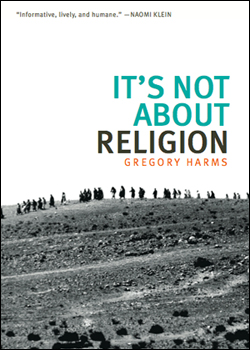
I’m happy to call author Gregory Harms a friend. He is not only a good conversationalist and generous person, but he is also a formidable voice of reason and justice on American foreign policy, international relations, and the history and politics of the Middle East.
In the interview, Harms lays waste to much of the malicious lies and misguided perceptions about the Middle East, Islam, and the reasons many Arabs feel hostility towards the policies of the United States government. Readers will learn that Muslims are not frightening monsters hell bent on the destruction of all things American. They will also learn that much of the turmoil and tension in the Middle East is a direct result of American and Western policies, and that the tired expression “religion is the cause of all wars,” comes nowhere near reality.
Throughout the conversation, but more importantly, throughout Gregory’s brilliant and brave book, which I strongly recommend reading, he challenges the bigotry and aggression, that much to the pain of millions of people in the Middle East, dominates American political discussion of foreign policy and influences intervention abroad.
As I recall in my introduction to the interview, I met Mr. Harms at a bar called McBrody’s in Joliet, Illinois. We were reaching the wee hours of the morning, and Harms heard me make a positive remark about Neil Young. Harms agreed and incited a conversation , and a few years later, I’ve delighted in reading his three books (The Palestine-Israel Conflict, Straight Power Concepts in the Middle East, and the aforementioned It’s Not About Religion).
Anyone looking for truth to cut through the noise of the American media will experience the same pleasure and intellectual growth from reading his work. The new interview is a great place to start.
I’m particularly happy to have been associated with the interview, even if most of the insight in it comes from Harms, because Joe Macare, the editor of Occupied Chicago Tribune, gave it the highest praise imaginable. He called it a “middle finger to Sam Harris.”
In the words of Kurt Vonnegut, I often feel like a “man without a country.” I’m at odds with much of American culture, and am strongly opposed to much of American politics. Front Porch Republic – a website founded by the excellent writer, and fellow Gore Vidal admirer, Bill Kauffman – is the closest thing I have to a political and philosophical home. Their “about” page summarizes their mission and position well:
The economic crisis that emerged in late 2008 and the predictable responses it elicited from those in power has served to highlight the extent to which concepts such as human scale, the distribution of power, and our responsibility to the future have been eliminated from the public conversation. It also threatens to worsen the political and economic centralization and atomization that have accompanied the century-long unholy marriage between consumer capitalism and the modern bureaucratic state. We live in a world characterized by a flattened culture and increasingly meaningless freedoms. Little regard is paid to the necessity for those overlapping local and regional groups, communities, and associations that provide a matrix for human flourishing. We’re in a bad way, and the spokesmen and spokeswomen of both our Left and our Right are, for the most part, seriously misguided in their attempts to provide diagnoses, let alone solutions.
Though there is plenty we disagree about, and each contributor can be expected to stand by the words of only his or her own posts, the folks gathered here more or less agree with the above assertions. We come from different backgrounds, live in different places, and have divergent interests, but we’re convinced that scale, place, self-government, sustainability, limits, and variety are key terms with which any fruitful debate about our corporate future must contend.
Most of the Front Porch Republicans are more conservative than I am on a bevy of issues, but we all share a fundamental distrust in centralized power. A philosophical cousin of the Front Porch Republican movement is the Catholic subsidiarity theory of governance, which Robert Barron explains well in this video:
A regular reader of mine once asked me in an email to give a succinct statement of political philosophy. Although, it is not perfect, I answered back with this: I have a Christian concentration on the neighbor and the stranger. I oppose large, unaccountable entities, such as big government and big business, that are forms of concentrated and centralized power, which rob from the individual and community, dignity and autonomy.
I believe the federal government and Welfare State have a helpful and important role to play in the creation of a fair and just society. Like Robert Barron, I believe that local control, neighborhood action, and individual autonomy are the ideals, but that some tasks are so large and complex that governmental intervention is necessary. Health care is an instructive example here. It seems obvious that the most efficient and most humane way to distribute medicinal resources and services across a sizable population is with federal government involvement. Even with all of its flaws, senior citizens prefer Medicare to the private insurance scheme. Mitt Romney and Barack Obama’s ongoing wrestling match to emerge as the champion of Medicare indicates as much.
That being said, I reject the popular political distinction between big government and big business. They are flipsides of the same coin. Bureaucrats and billionaires are aligned in the destruction of human scale community. The useless Democratic and Republican debate, along with the antiquated liberal and conservative divide, obfuscates this reality, and it is the central reality of American life.
I make this point in my new essay for Front Porch Republic called “The Dangerous Alliance of Big Government and Big Business.” The essay – my fifth for Front Porch – largely wraps up my political philosophy, undresses both political parties as equal offenders, and includes a reference to a properly functioning and benevolent institution – The Rolling Stones (the underrated populist anthem, “Salt of the Earth”):
To illustrate my indictment of big government and big business collusion, I use the examples of eminent domain, the bailouts for “too big to fail” banks, the Prison-Industrial Complex, and the individual mandate in the Affordable Care Act (Obamacare). I also refer to the “export of big government and big business collusion” that comes in the form of defense contractors, private army firms, and massive Pentagon funding. I could have added student loans to the list. What else could anyone call them? Colleges charge burglarizing rates for admission, requiring students to incur staggering amounts of debt from student loans. After universities get their money, the students not only pay the government, but must do so with interest. If they fail to comply, the government will destroy their credit and garnish their wages.
Most political conversations – whether they take place on the equally nauseating networks of Fox or MSNBC – have little relevance or meaning for the average American. With my new essay, I attempt to contribute to the creation of a real conversation. Front Porch Republic is committed to this cause, and I’m proud to be part of it.


 David Masciotra