September PopMatters Column: Sex Education and Smokey Robinson

The newest installment in my monthly column for PopMatters is up. In my new essay, I use the concert experience of a true American treasure – Smokey Robinson – to write about music history, the enduring power of Motown, and the joyful and playful sexuality that Smokey expresses. In the essay – “The Way You Do The Things You Do: Sex Education and Smokey Robinson” – I make the argument that “In his golden years, Robinson is more convincingly and excitingly sexual than nearly every young performer who will join the parade of sensationalistic imagery on the MTV VMA awards,” because, “He always understood and continues to understand that sexuality is best enjoyed when it is playful, romantic, passionate, and generous.”

One of the most sad and tragic elements of contemporary American culture is the removal of playfulness, intimacy, and most of all, fun from sexuality. Two warring factions of extreme viewpoints – I’ll call them the Bible Belt and Breast Implants crowds – have reduced sexuality to an ideological prop and a method of conquest. Whether the vulgarity of hip hop, pornography, and much discussed “hook up” culture seeks to conquer a partner for the purposes of ego orgasm or the puritanism of virginity pledges, abstinence only sex education, and censorship aims to conquer sexual impulses for the purposes of political orgasm, sex no longer looks free and fun.

Smokey Robinson is not only one of America’s greatest living songwriters and singers, but he is also an avatar of an alternative form of sexuality – one that embodies the ethic of reciprocity – one that seeks to share pleasure – one that is fun, but also one that is spiritual.

Many of my columns at PopMatters have elevated the joy of the black musical experience. I’ve written about Mary J. Blige, Shemekia Copeland, Ruthie Foster, Diana Ross, Nikki Jean, and now Smokey Robinson, in an attempt to demonstrate that the joyful swirl of sensuality and spirituality surrounds the best of black music and imbues it with a form of magic – magic that makes the listener feel more human.

Over the past couple of years, I’ve come to believe that Smokey Robinson is one of the greatest exemplars of this tradition, and that he is, at this point, the most important living popular American musical performer. His influence is immeasurable and inarguable. He, along with Diana Ross and Stevie Wonder, represent the last living legends of Motown. The soul-pop music of their era, which also hit the airwaves from Chicago (Curtis Mayfield, Chaka Kahn), Philadelphia (Teddy Pendergrass, The Ojays), and Memphis (Al Green, The Staple Singers), possessed a spiritual joy that sustains those performers and their audience. It combines the influence of the church and the club to create a live experience that is beyond anything else on the modern stage. The professionalism and excellence of those performers shoots through the loins, quickens the heart, and shakes the soul.

“The Way You Do The Things You Do: Sex Education and Smokey Robinson” touches on all these issues and ideas, but it is most about the “sex education” of Smokey Robinson. “Doesn’t it feel good to feel good?” he asked the audience towards the end of his show. It is a question of both simplicity and profundity, and it is one that many people – obsessive porn users, careerists who treat sex as a blocked activity on an itemized calendar, and young people terrified of intimacy – need to look in the mirror and ask.

Fun, romantic, and intimate sexuality needs rescuing in American culture, and Smokey Robinson offers a lifeline.
Truthout Reprints My Tribute To Gore Vidal

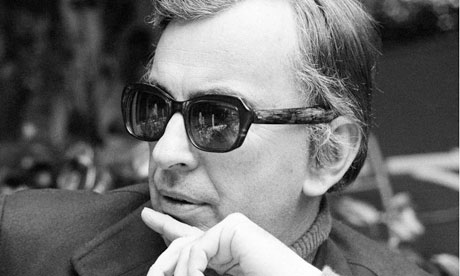
Truthout, the popular news and politics website, has reprinted my eulogizing tribute to Gore Vidal. The essay – “The Love of Light: Gore Vidal, 1925 – 2012” – was originally published on PopMatters.

Gore Vidal, more than any other writer, influenced me to become a writer. As I make clear in the essay, I entered the life of writing with the firm belief that I would never be as good as Vidal, but that I could spend my life trying. Nearly ten years later, I’m still trying, and I still believe that such an effort is one of nobility and integrity.

Readers of Gore Vidal know that his talent and intelligence extended far beyond political analysis. In my essay, I spend a great deal of time talking about his most inventive novels – many of which had little or no political implications. Vidal is, however, for better and for worse, most famous as a historian and social critic.

In the weeks since his death, I’ve found myself longing for Vidal’s brilliant, tough, and funny voice. I’d like to hear him turn his weaponry of wit and wisdom against the insanity of the current Presidential election, and I’d like to hear his insights – memorable and provocative to be sure – on the visible decline and decay of American civilization that he predicted throughout his career.

PopMatters has a smart audience drawn to its cultural commentary. I’m grateful for my post as PopMatters columnist, but I am also glad that Truthout – a website dedicated solely to politics – has reprinted the essay. I hope that the essay will encourage the Truthout audience to take accurate measure of the loss American political culture suffers in the absence of Gore Vidal.

The title of my essay, “The Love of Light,” comes from his extraordinary historical novel Julian:

“The spirit of what we were has fled. With Julian, the light went, and now nothing remains but to let the darkness come, and hope for a new sun and another day, born of time’s mystery and man’s love of light.”


I Interview Best Selling Author and Noir Master James Lee Burke

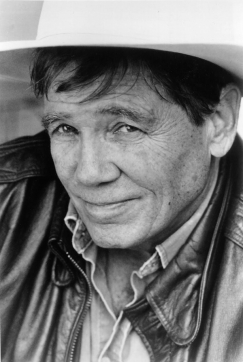
James Lee Burke is one of the best writers in America, and one of the true masters of the crime novel. His stories about homicide detective and recovering alcoholic Dave Robicheaux, set in New Orleans and New Iberia, along with his books about Texas Sheriff Hackberry Holland, effortlessly weave noir, mysticism, and politics to present a panoramic view of the American flesh and the human spirit. The genre in which he casts his seductive spell may be crime, but his masterful prose and penetrating insight elevate his work far beyond any genre, making him a literary treasure.

I discovered James Lee Burke after watching the film In The Electric Mist, starring Tommy Lee Jones as Dave Robicheaux, and based on Burke’s novel, In The Electric Mist with the Confederate Dead. Within days, I was reading Burke’s books, and since then, I’ve devoured much of his bibliography. I’ve also enjoyed listening to a few of the books on CD. The narration of Will Patton, who has starred in such movies as The Client, The Postman, and Brooklyn’s Finest, makes Burke’s soaring prose seem as if it was written for the stage, and not the page.

I recently had the pleasure and privilege of talking on the phone with Burke for an hour and twenty minutes. Writers often acquire the reputation of being reclusive, inhospitable, and cantankerous. Burke, however, was a largehearted gentleman. Our conversation ran well over the thirty minutes arranged by his publisher, and much of that was due to his genuine interest in my interpretation of his work and my ideas regarding its dominant themes. The final twenty minutes of our discussion involved a role reversal in which he asked me questions about my work and my life.

Burke’s work is important, because it is high quality literature. Excellence and greatness provide their own justification. Anyone who reads the soul-stirring, thought-provoking, and heart-pounding stories of Burke will intuitively understand how he fulfills the calling of the artist and strengthens his medium.

There is another component of importance to Burke’s novels, however, and it centers on the unique vision of life – especially American life – he brings to bear on modernity. The American Empire is collapsing, and the American economy is crashing. Burke surveys his surroundings, and righteously responds with a Leftist Christianity that, somehow without paradox, blends realism with mysticism. His voice is one calling for justice in the face of widespread exploitation of the poor, the environment, and weak by the powerful forces of greed, cruelty, and iniquity.

The Los Angeles Review of Books – a fine literary publication – allowed Burke and me to explore his career, philosophy, and vision of America by taking a journey into what I call the “noir mystic.” Asking Burke good questions was easy. Reading his work sharpens the mind. Burke’s answers make the interview, titled “Into The Noir Mystic: A Conversation about Injustice, Evil, and Redemption with James Lee Burke”, essential reading. In addition to his own work, we discuss how the U.S. government – at the state and federal levels – has become a distributor of vice, war, Christianity, the increasingly hostile character of American life, and the loss of “Edenic America.”

My “Must Read” Book List for the Presidential Election Season

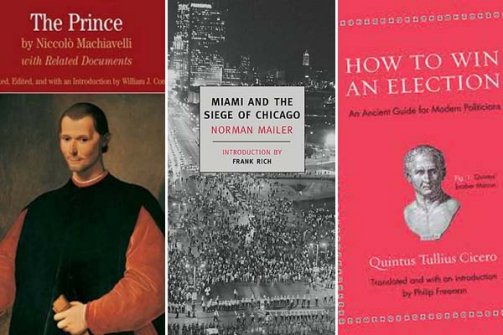
Today the Daily Beast is allowing me to force my tastes on the masses. I’ve written an annotated list of my top ten books for the Presidential election season. The list includes three of my favorite authors – Norman Mailer, David Foster Wallace, and Gore Vidal, who I recently eulogized for PopMatters.

One of the reasons I enjoy writing about pop culture and literature is that it enables me to introduce unpopular political or philosophical ideas into mainstream discussion.

The overarching theme of my Daily Beast article, and the dominant theme of all the books I’ve chosen for inclusion, is that Presidential politics is a ghastly and fraudulent spectacle of stagecraft in which personality dramas, public relations, and image branding silence and defeat discussion of the issues most important to the lives of the American people. It is often difficult to enter such an unforgiving critique into political debate, but with the usher of pop culture and/or literature, it can happen.

The main reason I’ve selected all of the books on the list, however, is that they are valuable and insightful works of art or research that elevate their respective genres to new standards of excellence. Everyone, regardless of ideology or level of political passion, could benefit from reading great books.