I’ve written several essays and stories for Salon in the past few months, including an extended reflection on patriotism, which led to an interview with one of America’s greatest poets, Martin Espada.
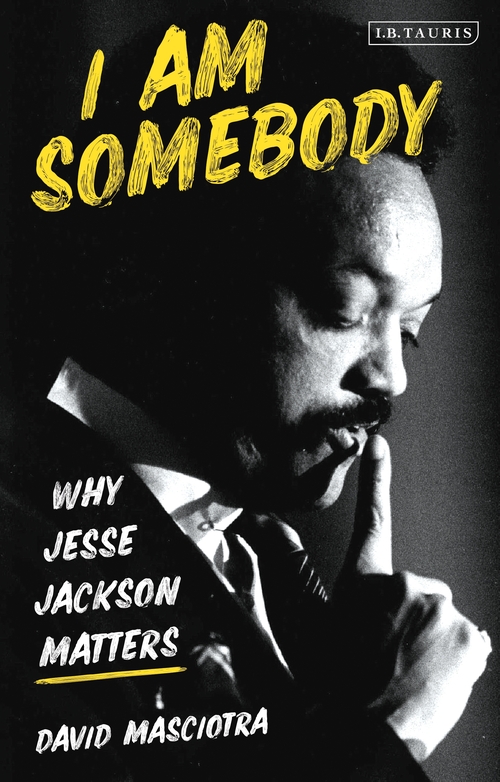
One of the great gifts of my life is the development of a relationship with one of the world’s leading human rights leaders, and one of the United States’ leading dissidents, Jesse Jackson. The product of our six year conversation is my new book, from publisher I.B. Tauris,I Am Somebody: Why Jesse Jackson Matters. A blend of biography, political analysis, and journalism, I Am Somebody offers a bracing examination of Jackson’s momentous life, and a thorough dissection of American politics – from racial injustice to foreign policy.
In his foreword, Michael Eric Dyson calls I Am Somebody “brilliant.” Political scientist extraordinaire, Christina Greer, writes that it is “for anyone interested in presidential politics, Black American political history, and the link between the civil rights movement and modern political uprisings.”
James Felder, a historian and former member of the South Carolina House of Representatives, argues that I Am Somebody belongs in “every home and library.”
The most moving and informative assessment came from Jesse Jackson himself. He said, “It is the best and most thorough thing ever written about my work.”
Media Appearances
Jackson and I had a wonderful conversation for the How To Academy in London:
Jackson and I also appeared together on “N’Digo Studio,” a television program hosted by Chicago journalist and media pioneer, Hermene Hartman, who also interviewed me for N’Digo magazine.
My regular column at Saloncontinues at full force. In the past couple of months, I’ve written about the danger of the right wing, the crimes of the American government, and the desperate need for the left to advance social democracy through a robust agenda, most especially the Green New Deal.
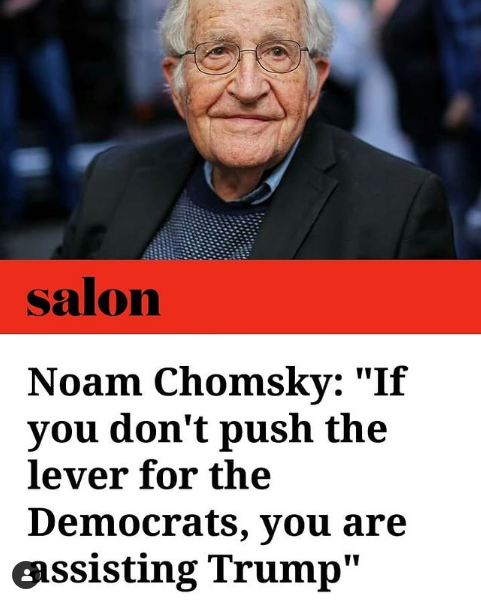
On the latter subject, I had the thrill of interviewing the legendary genius of linguistics, politics, and philosophy, Noam Chomsky. Chomsky and I discussed climate change, socialism, and American politics.
I was a 13 year old boy when I discovered the music of John Mellencamp. His songs were my usher into the world of writing, art, and creativity. A continual source of powerful inspiration in my work and life, I wrote my second book, Mellencamp: American Troubadour, about his music, and the ideas that surround it. The impact and influence of Mellencamp’s music on my life is so large that, without it, it is impossible to conceive of myself.
On Memorial Day, I had the incredible thrill and honor of driving to Nashville, Indiana to visit John Mellencamp in his recording studio. We sat for a long, fascinating, and fun conversation in the same room where he and his band have made so many of my favorite songs since 1983. Then, I watched he and the band rehearse for their upcoming tour, playing “Pink Houses” and “Paper in Fire.” To add to the pleasure and amazement of the experience, I also met the beautiful and soulful Carlene Carter, and had the opportunity to have a discussion with her.
Mellencamp’s first words to me were, “It is a good book.” That simple, but profound compliment is one I will always treasure (He was referring to my work of biography and cultural criticism, Mellencamp: American Troubadour).
Here is an amusing exchange from our conversation that did not make my essay: After Mellencamp explained that audiences have jeered and heckled him several times throughout his career, he added that, “not once has anyone said anything derogatory to my face.”
“Really, why do you think that is?” I asked.
“Because they know they type of person that I am. Would you say anything?”
“Maybe.”
Mellencamp laughed. “Well, I’m an old man now. So, you could probably kick my ass. Fifteen years ago, you would have kept your mouth shut.”
In my new column at Salon, I examine the idea of patriotism, comparing the liberal interpretation of American history with the right wing invention of it, and conclude that those who most obnoxiously wave the flag and shout love of country, are largely ignorant of American history and identity.
In a recent column at Salon, I explain why the phony media melodrama about free speech wars on college campuses does not represent reality at the average university. The story is largely an invention.
In my newest essay for Salon, I review feminist scholar Susan Bordo’s topical and timely book, The Destruction of Hillary Clinton.
I admire Hillary Clinton.
Clearly, I am in the minority. To express admiration for Hillary Clinton has become a radical act. While the accomplished public servant is not without flaw (her cynical support for the Iraq War is still infuriating), the level of hatred and hostility that exists for Clinton is clearly hysterical and paranoid; without any basis in the rational universe. She has become history’s greatest monster, even while a gruesome amalgam of stupidity, corruption, and bigotry occupies the Oval Office.
Bordo, as bewildered as I am by the odd animosity for Clinton, analyzes the 2016 election. With an emphasis on misogyny, Bordo presents a convincing case that right wing paranoia, double standards against women, and mass media mediocrity coalesced to poison the public against one of the most intelligent and qualified candidates for the presidency in the modern era.
The book has its weaknesses. Bordo never acknowledges that Clinton made massive missteps in her campaign, but more important, her argumentation is detached from the the actual lives of many voters, most of whom she admits do not pay close attention to politics.
The roots of misogyny are much deeper, and have a much more personal origin, than idiotic journalism or manipulative campaign tactics.
In my latest column for Salon, I examine how Republicans in government are incapable of governance. After having spent years mocking liberals as overly ideological, naive, and unable to make difficult decisions, conservatives have now drifted so far to the fringes of the right that they cannot implement or administer public policy.
The fiasco of health care reform is an illustrative example of Republican ineptitude.




 David Masciotra