New Column for The Indianapolis Star: Defending Howard Zinn Against Attack and Censorship

Howard Zinn was an immeasurably important historian who, in his work, activism, and life, persevered with tireless devotion and tough tenacity to expose the crimes of American Empire, honor the victims, and celebrate the heroes – both sung and unsung – who fought for humanity, freedom, and justice against destruction, bigotry, and aggression in their own place and time.

Zinn’s work was profoundly influential on me, and I still consider the education he gave me – even if only through his powerful books – essential to my formation as a writer and thinker.

Howard_Zinn_A_Peoples_History_Of_The_United_States_smA recent controversy cast Howard Zinn’s legacy against Mitch Daniels, former Governor of Indiana and current president of Purdue University. As Governor, Daniels not only attacked Zinn’s work as “anti-American” (the usual slander) and “crap”, but also worked to remove Zinn’s books from history classroom in state colleges.
I’ve praised Daniels for his intelligence and excellence as manager of Indiana’s economy as Governor, and his implementation of a tuition freeze as president of Purdue. I was disappointed that Daniels decided not to run for President, under the Republican primary, in 2012. His track record of success and achievement in Indiana, along with his moderate positions on social issues and his willingness to cooperate with state Democrats, would have made him a worthy contender for the office of Presidency.

I cannot and will not, however, defend his narrow minded and autocratic move for book banning.

In my new column for the Indianapolis Star“Mitch Daniels Should Have Been More Open about Howard Zinn’s Magnum Opus” – I explain the importance of Zinn’s work and I advocate that more Americans spend some time absorbing it.

Read the column for the rest of my take on Daniels, Zinn, education, and patriotism.

Additional Note: I’d like to thank Truthout for reprinting the article.

New Column for The Indianapolis Star: America Should Embrace Immigration

In my new column for the Indianapolis Star – “America Should Embrace Immigration”, I take advantage of the honesty privilege writers enjoy. I’m not running for office. So, I can hop directly onto the third rail and declare myself an advocate for open borders.

Read my explanation at the Indianapolis Star.


New Essay for The American Conservative: Rock for Republicans? How the GOP Misunderstands John Mellencamp’s Heartland Ethic

A few months ago, the editors of The American Conservative flattered me with an invitation to write an essay on the the career and politics of John Mellencamp, and consider why so many Republican politicians play his songs at campaign rallies, when he is a liberal.

The essay – “Rock for Republicans? How the GOP Misunderstands John Mellencamp’s Heartland Ethic” – appears in the newest issue of The American Conservative, which has a focus on localism.

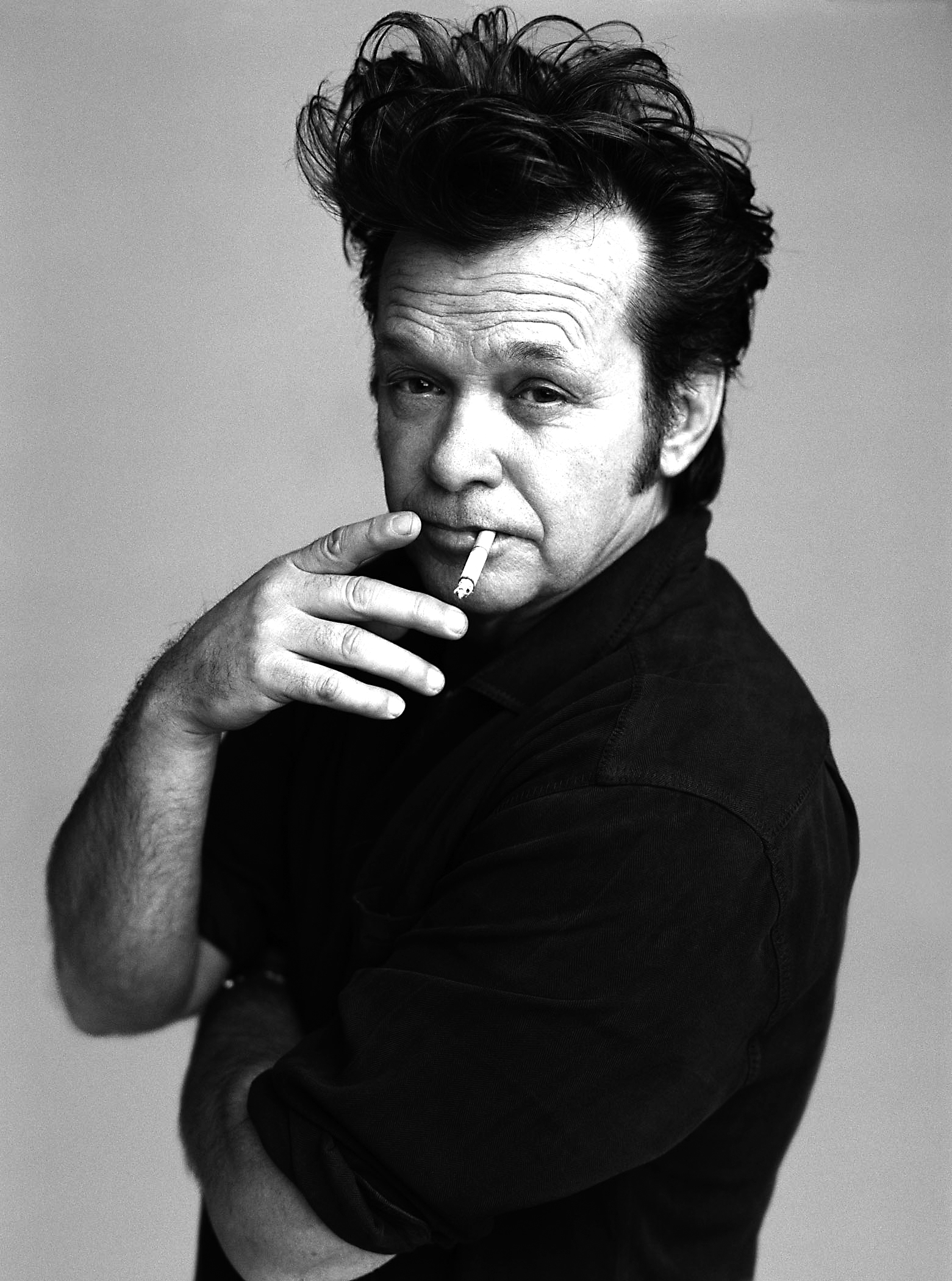
Mellencamp writes what he calls “plainspoken” lyrics. There is no other songwriter who moves me to think, feel, and reflect deeply on my life and my community more than Mellencamp. As I attempt to explain in the new essay, his politics, however, are complicated. There is no doubt that he is a leftist, but “his is a community-based leftism that distrusts bureaucracy and hates paternalism, yet believes in social assistance for the poor, sick, and hungry, the widows and orphans that the Bible identifies. Mellencamp inhabits common ground with libertarians on social issues, and he is a consistent opponent of war and foreign intervention, but he does not believe that an unfettered free market will solve every social problem.”

mellencampcigaretteMellencamp’s firebrand version of antiwar, left populism is exactly what is currently missing from the ivy league, elitist, and impotent liberalism of the mainstream media, the Democratic party, and the sanitized neighborhoods of lefty chic where people believe the world’s biggest problems are plastic bags, inadequately sized bicycle paths, and indoor smoking.

Next year the University Press of Kentucky will publish my book All That We Learned About Living: The Art and Legacy of John Mellencamp. In the book, I will elaborate on Mellencamp’s politics and further draw out interpretation of how his music embodies many important ideas about the American story.

Politics will make up only one chapter of the book, as it is comprehensive and covers Mellencamp’s entire life, but readers who enjoy my essay for The American Conservative, should look forward to additional reading next year.

Interview with Jian Ghomeshi of The Q for CBC about James Gandolfini

Last week I was thrilled to talk with Jian Ghomeshi, host of The Q on Canadian radio, about the career, influence, and legacy of James Gandolfini.

We had a brief, but fun and lively conversation about the legendary actor. It is available for listening at the Q’s website on the 6/21 podcast. My segment begins around the 12 minute mark.

Jian Ghomeshi is a sharp host and he runs an entertaining and stimulating show. I was honored to receive his warm welcome to the airwaves.

promo-qpodcast-sm

New Essay at The Atlantic – James Gandolfini Changed TV Forever

It is tough to measure the void left by the loss of greatness. The hole grows wider especially when one considers that an important inquiry Americans must work to answer is whether or not America still has the infrastructure to support the production of greatness.

Few works of art have touched my life with the punch and staying power of The Sopranos. I’ve made my way through the DVDs several times, and those who know me, have often accused me of having an obsession with the iconic television program.

Writers are people of many obsessions. Our obsessions are often what drive us to spend so much time living in our own heads, and to spend so much time alone in quiet rooms working hard to release what we find while living there.

Although I did not know the man, and my heart goes out most to those who did, I was shocked and saddened by the death of James Gandolfini. His legendary, game changing, and ground breaking performance as Tony Soprano changed the way I thought about storytelling, American art, and American culture.

I was thrilled and honored to pay tribute to James Gandolfini, focusing on his role as Soprano, but also mentioning some of his other great performances in film, for The Atlantic. In my essay I argue that Tony Soprano was the Marlon Brando of television. He changed the medium forever, and he did so by bringing uncanny and unmatched depth and complexity to the small screen.

James GandolfiniHe was also one of the few remaining American actors who could authentically represent the working class in his performances. I hope that everyone will read my essay, and revisit the challenging, brilliant, and entertaining work of James Gandolfini.

New Column for The Indianapolis Star – “Political Correctness about to Get Worse on College Campuses”

Last week, the Indianapolis Star ran my column on the tyranny of political correctness. Norman Mailer might have put it best when he said, “I detest political correctness. It is the enemy. There are many enemies, but they all come under the one rubric of one person telling another person how to think.”

It is not with the words of Mailer that I begin my column, but with the words of another artistic genius and free speech warrior – George Carlin. The hilarious and rebellious provocateur explained that in his life he had witnessed a shirt in which the biggest threat to free speech went from the hysterics of the right wing to the PC policing of the left wing.

carlinAs I make clear in the column, those who still value free thought, robust conversation, and flirtation should prepare for a battle, because the Department of Justice recently issued a new policy to all colleges that receive federal funding to hideously restrict the exercise of free speech.

Read about the policy and my indictment of it at the Indianapolis Star.

New Essay at The Atlantic – “Senators Durbin’s and Kirk’s ‘Elitist, White Boy’ Plan to Fight Gangs is Right

Every summer in Chicago, police, residents, and reporters expect hundreds of murders to occur in the city. Headlines of drive by shootings that leave a corpses curbside are routine. For the first time, lawmakers are proposing a plan for the destruction of street gangs in Chicago.

Illinois Senators Durbin and Rich have crossed party lines to collaboratively secure $30 million in federal money to fund the use of racketeering laws against street gangs. For too long, evil and empty-headed thugs have terrorized the streets of poor neighborhoods – intimidating law abiding people into silence, holding children hostage to their pathetic turf wars, and driving middle class people away.

Congressman Bobby Rush of Illinois responded to the smart idea with race baiting demagoguery. He called federal targeting of all gang members for arrest an “elitist, white boy” solution, and insisted that what gang members really need is “jobs and education.”

In my new article for The Atlantic “Senator Durbin’s and Kirk’s ‘Elitist, White Boy’ Plan to Fight Gangs is Right” – I celebrate the Senators for their bipartisan aggression in the attack of a serious scourge on our society.

I also show how the disingenuous “jobs and education” lament undermines, disrespects, and insults all of the murderous gang members’ victims – the decent, law abiding and working poor who inhabit their “territory.”

CT shooting001.JPG


Major Announcement: I am Now a Columnist with the Indianapolis Star

Readers here have probably noticed that I’ve been writing political commentary regularly for the Indianapolis Star. I am happy to report that I have now joined the staff as a columnist. My column will appear once every two weeks. I’ll be writing tough essays on politics with a spirit of aggression. I’ll post all articles here. Stay tuned.

the-indianapolis-star


New Essay for The Indianapolis Star – “Craft Beer Shows Why Americans Should Toast Deregulation”

I’m generally supportive of alcohol and tobacco. Even those that are not, however, might want consider the insights into politics and economics that the history of alcohol in America provides.

The transformation of the beer industry, for example, shows that governmental regulation often creates a monopoly supportive of big business, while deregulation and limited government empowers entrepreneurs, encourages cultural variety, and improves options for consumers. Needless to say, reality is opposite of the poison most pundits and politicians brew every day.

In my new article for the Indianapolis Star“Craft Beer Shows Why Americans Should Toast Deregulation” – I take readers through the colorful history of beer in America, and I end with a toast to President Jimmy Carter, who was most responsible for the deregulation of the beer industry, and a tribute to small government.

beerBefore Carter deregulated the beer industry, there were 73 breweries in the United States. Right now, there are 2, 416. Consider all the tax revenue, jobs, and beer America would lack if proponents of big government interference in small business won the debate. For more on the history, and for the truth behind the numbers, read the full article.

Angry Reader #1

This is the first installment of a new feature on DavidMasciotra.com. Once every couple of weeks, I will post the content of an email I receive from an angry reader and write a brief response. Enjoy a look at the friendly correspondences I receive as part of my profession and trade.

Angry Reader #1 (In reply to “…Nanny State Attack on Freedom, Personal Choice”)

::Unaddressed::

Your awkward use of the term “socially inept” is what caught my eye.  Are those who dislike people huddling around the entrances of public buildings puffing on smokes the socially inept?  Are those who find it discomforting and bothersome to watch people who can’t eat a meal, have a drink, take a break, drive a car, or do anything for that matter, without lighting up a cigarette?  Are they socially inept because they don’t want their clothing smelling like smoke, because they find the littering of butts filthy, or because they don’t accept the compulsive, addictive habit of smoking  as socially acceptable?

Most importantly, you are talking about a school, an institution of higher learning (even if it is just Ball State).  And as such, schools have an additional responsibility to those who attend.  Schools have an additional responsibility to care for the health an well-being of those students who attend.

Freedom and independence are not the only values of a college education.  Structure, discipline, responsibility, thoughtfulness, creativity, learning how to learn, health, hygiene, respect, etiquette,  and many other qualities are just as important.  Learning good skills and habits, making good choices should be encouraged.

College is a transitional time. It is not a free for all.  It should provide a balance between a structured environment, and the freedom to make one’s own decisions.

Those who teach  should be held to a higher standard, too.  Just because class is over, doesn’t mean Professor Masciotra needs to rush out of the building to light up that ever relaxing cigarette, or pour that much needed glass of scotch.

::Unsigned::

 Dear Angry Reader,

The term “socially inept” came in a juxtaposition with the term “politically correct.” It was a tongue-in-cheek remark castigating the politically correct for their uptightness, lack of humor, and love for phony outrage that makes them socially irksome. The joke isn’t hilarious, but it is clear enough to anyone but the comically inept.

You might want to reorient the priorities of your life. Stop spending so much time watching smokers, especially if the sight of them lighting up infuriates you. The next time you see someone smoking, just look away. It really isn’t necessary for you to stop what you are doing and stare in silence, while your blood pressure rises and head begins to ache. Do yourself a favor and leave smokers alone. That’s one of the privileges of living in a free society. You can stay away from people engaging in behavior that bothers you. Similarly, why are you allowing the compulsions of strangers to upset you? If you’re only worry involves the addictions of people you hardly know, I envy you.

If my phrase “socially inept” caught your eye, then you gave yourself away with the phrase, “even if it is just Ball State.” I’m not sure if you received an Ivy League education or you just like to pretend as if you received one, but the next time you write an angry letter to a columnist who condemns the arrogance of “enlightened” elite, try not to expose your own snobbery. I have enough respect for students and employees at higher educational institutions – even ones like Ball State, and God forbid, junior colleges – to believe they should have the right to make their own decisions. When you insult an entire college, especially one that claims John R. Seffrin, the CEO of the American Cancer Society, Jeffrey D. Feltman – former ambassador to Lebanon, and David Letterman as graduates – you position yourself in the argument with the subtle tyrants who believe they are smarter than most people and can, therefore, impose their lifestyle choices on the masses.

The rest of your rhetoric is vague and bizarre. Sure, colleges should encourage their students to make good choices, but at what cost? You do realize that those students – all of whom are legally adults – are paying tens of thousands of dollars to attend classes. It would be more productive for the institutions of higher learning – even Ball State – to focus on providing the best and most cost efficient education possible for students, rather than policing the legal behavior of its students and employees. Brady Hoke – head coach of football at the University of Michigan, John Schattner – founder and CEO of Papa John’s Pizza, and Jim Davis – the cartoonist creator of Garfield, all seem unharmed by the presence of smokers at their alma mater, which by the way, is Ball State University.

I don’t drink scotch. I drink bourbon.

Cordially,

David Masciotra