New Essay for the Indianapolis Star – “…Nanny State Attack on Freedom, Personal Choice”

I’ve hated the nanny state since Illinois passed its indoor smoking ban in 2007. I wrote a column in the (Joliet) Herald News condemning the oppressive move as an infringement on freedom, personal responsibility and choice, and private property rights.

Since then, several more states has passed smoking bans, many cities and counties have passed transfat bans, Las Vegas and Orlando have criminalized feeding the homeless outdoors, and Mayor Rahm Emanuel has mandated that Chicago vending machines include “healthy snakes.” Marijuana and narcotics remain illegal, and there are many proposals in New York City, Chicago, and elsewhere to expand restrictions on the consumptive and dietary habits of law abiding citizens.

In my new column for the Indianapolis Star, I write about the subtle tyranny of the nanny state, and I express contempt for “self-appointed school masters who satisfy their puny visions of grandeur by interfering in the lives of tax paying, free thinking adults, and believe those adults are too stupid to determine their own priorities and preferences.”

smokerHow, when, and why did liberals become the scolds? The same generation that took LSD, freely fucked in the mud, and played air guitar with Jimi Hendrix at Woodstock now lecture people for smoking Marlboros, eating doughnuts, and using plastic bags. Worse, they’ve raised generations of younger people who have the same bizarre insistence on interjecting their own pathetic dogmas into the lives of those in their neighborhoods and cities.

As my new article makes clear, anyone who believes these so called “minor” violations are unworthy of our attention are in for a rude awakening. The “enlightened” elite have an agenda, and it includes forcing the unwashed masses into compliance with their lifestyle.

Those of us who prefer to be left alone should make that preference clear. That’s what my new essay is about.

New Essay at The Atlantic – “Mark Sanford, Romantic Hero”

Mark Sanford won a special election for Congress in South Carolina this week after many pundits and politicians believed his career was over due to his irresponsible actions as governor. He left the state for six days to win the affection of an Argentinian journalist with whom he had fallen in love and exchanged emails for over a year. He left his wife and risked his political career in making the trip, and said that he did so, because “he could die knowing that he found his soul mate.” Sanford and the journalist are currently engaged.

I am not sure if it is politically good that Sanford now has a seat in Congress. I don’t really care. Culturally, however, it is very good.

American culture needs examples of romantic bravery and, instead of punishing those who risk everything for love, we should respond with empathy and even measured respect.

I make this argument in my new essay for The Atlantic“Mark Sanford, Romantic Hero.” It is sad and unfortunate that Sanford hurt his wife and children, but those who understand and appreciate the power of love realize that it is a mysterious and frightening directive. It can inspire beauty, cruelty, and a combination of both. As the Rev. Al Green sings, “Love and happiness / It’ll make you do right / Make you do wrong.”

In the essay, I contextualize the Sanford affair by placing it smack dab in the middle of an American culture committed to denying the power of love – “Sanford’s display of romantic bravery that rivals the depiction of the mysterious directive in tragedies and epics is rare in politics. In fact, it is rare in American culture where more and more people prefer to play it safe. Hooking up, online dating, and resistance to the traditional date are simply ways of disguising a guardedness that betrays a fear of love. Real love will make people behave like Sanford, and that is frightening. As essayist Cristina Nehring points out, American culture offers the twin gods of ‘meaningless sex’ and ‘meaningless marriage’ in order to quiet such fear.”

Life is a complicated affair and those who live it on the emotional edges run the risk of creating messy and hurtful situations. To look at the general response to the Sanford affair, however – and the comment section of my article gives a good illustration – is to believe that everyone has lives that are neat, clean, and never marked by the foibles of love and lust. Human affection and intimacy are good, they have value in themselves, and they deserve honor and respect. Sometimes, they win the day, and in the process, leave a path of wreckage, but that wreckage is easier to manage than the quiet death of ignoring the dictates of the heart and the truth of the imagination.

Read the entire essay to learn how I separate Sanford from Clinton, Craig, Spitzer, and other public officials disgraced by sex scandal, and to learn how I would cast the romantic comedy inspired by Sanford’s story.

New Essay for The Atlantic: Why Still So Few Use Condoms

Liberals are obsessed with condoms. They are convinced that teenagers, adult couples, and gay men don’t use condoms because they don’t have sufficient “knowledge and awareness,” and they believe that the Catholic Church is primarily responsible for the spread of HIV/AIDS in Africa, because of its stupid policy of preaching against condoms.

In my new essay for The Atlantic“Why Still So Few Use Condoms” – I take on these myths, and I acknowledge the politically incorrect truth, logic, and reality that most people don’t like or use condoms because they significantly rob sexuality of pleasure, intimacy, and spontaneity.

I also write about how the unlikely and unholy alliance of Planned Parenthood and the religious right have convinced generations of Americans that something they invented call “precum” can impregnate women, despite a mountain of evidence proving that the opposite is true.

OLYMPUS DIGITAL CAMERAIt was possible for me to write about all of this, because of the necessary, noble, and heroic work of Bill Gates, who after finding that in Africa most people don’t use condoms because of the pleasure factor, he has offered a $100,000 grant to anyone who can present credibly demonstrate that they are developing a condom that will “enhance pleasure.”

I begin my essay with a few quotes from the mighty Norman Mailer who put it best when telling Madonna, of all people, that “the only thing you can depend on with condoms is that they will take 20 to 50 percent off your fuck.”

New Essay for The Atlantic – “Kid Rock, Progressive Hero: Why He’s Right to Charge $20 Per Ticket”

In a capitalist culture and free market society, it is hard to make the argument that any business people should voluntarily charge less money for their product or service than people are willing to pay.

Multimillionaire rock and pop stars leave themselves vulnerable to criticism, however, when they claim to represent and sing for the common man, and present themselves as populist defenders of the dignity of everyday people.

It has become the norm for popular bands and artists to charge hundreds of dollars for admission into their concerts. The current model of exorbitant fees exists only because of the greed of the superstars, and the masochism of fans who pay the absurd costs for a two hour performance.

In my new article for The Atlantic“Kid Rock, Progressive Hero: Why He’s Right to Charge $20 Per Ticket” – I condemn the avarice of The Rolling Stones, Jay Z, and other major musicians who suck every ounce of blood possible from their fans, and I reserve special ridicule for U2, Neil Young, and Bruce Springsteen, who charge over $100 for tickets, while they sing about helping the poor and bash the greed of politicians and corporate CEOs.

There are few exceptions to the practice of gouging music concertgoers. Garth Brooks enforces a $25 maximum for his ticket prices, despite incredible demand. Brooks has broken records in Missouri, Tennessee, and Canada in the past five years for fastest sell out times. Dave Matthews explains that if he charges $30 per ticket, he will break even on major tours. So, he charges between $40 and $50.

Kid Rock has emerged as a new exemplar of compassion and selflessness in his business policies by co-headlining a tour with ZZ Top, and promising that no ticket will cost more than $20. He is also lowering T Shirt prices from the laughable industry standard of $40 to $20.

It is important to acknowledge that it is not the “champions of the working class” or “social justice” advocates, like Springsteen and Bono, who are taking a pay cut to help more fans afford their concert experience, it is the registered Republican, Romney supporting, Kid Rock.

As I explain in the article, it is my hope that Kid Rock’s new tour will embarrass other rock and pop stars into lowering their ticket prices, if only so that their anthems of liberal outrage don’t provoke enough laughter to drown out the drumbeat. I also hope that it will encourage more music fans to reward bands that respect them, and punish those that don’t.

Neil Young charged $200 for his latest tour, and when he played Chicago last summer, I asked my friend who owns an independent record store in Northwest Indiana why he wasn’t going to attend the show. He answered with words to live by – “I’m not throwing money at the feet of millionaires anymore.”

New Essay for The Atlantic – “The Real Problem With Hooking Up: Bad Sex”

The dominance of the market and utilitarianism over American culture has created a sexual lifestyle that rejects risk, intimacy, and depth. It has removed the fun and adventure from sex, and turned even casual sex with a new partner into a boring, mechanical, and idiotic experience. I’ve suspected that “hookup culture” is destructive to good sex after observing how little college students flirt, and after listening to some of the guarded, but honest comments students make about their sex lives.

Donna Freitas confirms my suspicions in her new book, The End of Sex. She conducted thousands of interviews to research her subject, and she determined, based on students’ own words, that hookup culture leads to bad and boring sex that leaves its participants unfulfilled at all levels.

In a new essay for The Atlantic, I review her book and give my own insight into hookup culture. The book review and essays allows me to put forward an argument that I’ve been making for a long time –  “The most lamentable aspect of hookup culture is not, as some social conservatives would argue, that it will lead to the moral decay of a modern Sodom and Gomorrah, but that it is so boring.”

hookup_culture_mIn a culture caught between puritanism and pornography, Freitas offers a third way to sexual independence and autonomy. It is a way for those of us who believe that conversation is often the best foreplay, moments of tenderness are more memorable than animalistic orgasms had without thought or emotion, and as I put it in the article, “The electrifying mystery of romance is powered by the surge of a smile from a stranger across the room, the heat generated by hands on an unfamiliar set of hips on the dance floor, and the sweet synchronicity of flirtation.”

New Essay for The Indianapolis Star – The Reason Behind the Cost of Higher Education and The Fight Against It

The Indianapolis Star has run my new essay on the reasons behind the absurd and paralytic costs of higher education. In the op-ed piece, I indict and condemn the venal, corrupt, and cruel system of higher education in America, calling it a “lucrative playground for tenured faculty, many of whom make well over $100,000 per year for teaching two or three courses a semester, and administration, whose mysterious duties and invisible tasks earn some of them annual salaries over $200,000.”

As I explain in the article, multiple studies have connected “administrative bloat” with the exorbitant increases in college tuition. University employees are enriching themselves, while they scam students and their families, and pay adjunct instructors miserly wages for carrying the same work loads as their tenured peers. They pull off the heist all while congratulating themselves for advocating “social justice,” “diversity”, and “multiculturalism.”

The cost of higher education leaves countless young people paying off heavy debts for their entire lives. It has become one of the most important factors in the lives of millions of Americans, yet no major political figure or media commentator tackles the problem. Mitch Daniels, former governor of Indiana and current president of Purdue, has broken the trend of complacency, by announcing a tuition freeze and promising to cut the Purdue budget by $40 million. My article summarizes the situation and places the issue in its proper context. I call the Daniels story one of the most important in America.

bildeOn an interesting side note, I pitched the story to several other major publications – news and culture magazines, left wing websites, and right wing websites – but everyone passed. I’d like to thank The Star for its courage in spotlighting the story. It seems that issue of student debt is not yet on the nation’s radar. To put it simply, most people don’t care, but when the student loan bubble pops, everyone will be wondering what happened and why no one tried to stop it. The bleak outlook of the future is why Daniels’ new crusade is so important.

Front Porch Republic Runs an Excerpt from Against Traffic

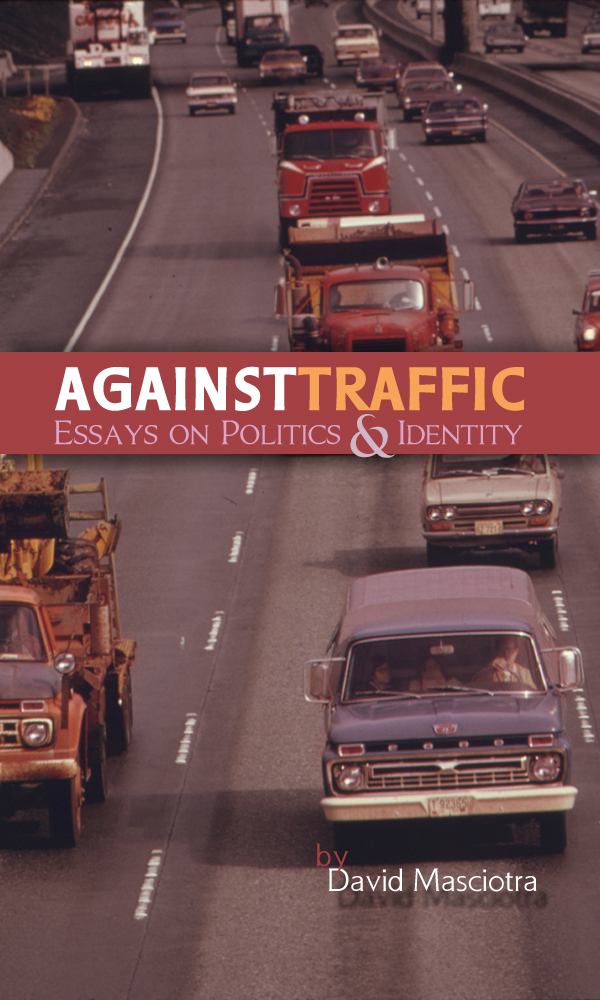
The always excellent Front Porch Republic has posted an excerpt from my new ebook, Against Traffic: Essays on Politics and Identity, called “Deleting The Individual: Big Data and Presidential Campaigns.” The excerpt is a good introduction to the collection of essays.

Against_Traffic_book_cover

New Essay at The Daily Beast – “Where’s The Faith? Try Crime Novels”

In the fall, at the University of St. Francis, I will teach a course on crime literature and film noir. Too long relegated to the ghetto of “genre”, noir actually possesses deep and profound insights into human nature. Novelist James Lee Burke, the greatest contemporary practitioner of noir, said in an interview I conducted with him that he uses the word “noir” to capture a “Darwinian world in which all the parameters that we convince ourselves we obey and to which we conform have no existence at all.”

In my new essay for The Daily Beast, “Where’s The Faith? Try Crime Novels”, I write that “Crime and noir have always told the story of people who decide to cross an invisible but palpable moral line. It then measures the wreckage—physical, emotional, and spiritual—that results from the voluntary crossing over into another ethical universe—a colder, tougher, and uglier universe. These same questions haunt the tales of the Bible and the lives of the saints.”

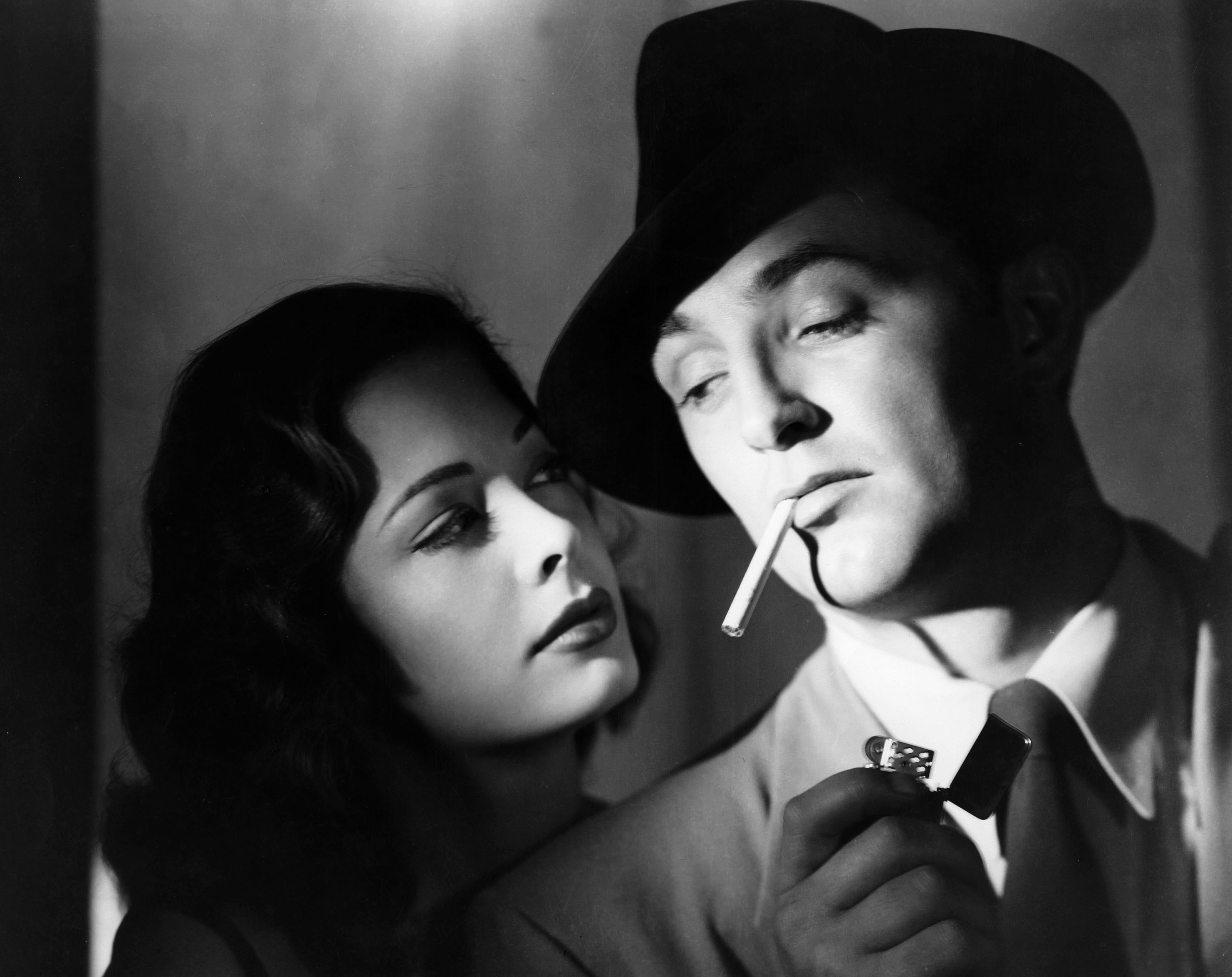
OUT OF THE PAST / BUILD MY GALLOWS HIGHOne of my many intellectual obsessions is noir. Philosophically and stylistically it manages to capture the depths (depravity, weakness to temptation, lust for power, greed, and sex) and heights (heroism, enforcement of moral codes) of human nature through its tough themes and Jungian interplay of shadow and light.

In “Where’s The Faith?” I I weigh in on the ongoing literary discussion of whether or not God is dead in contemporary American literature. I submit that the most engaging and compelling themes of religion, spirituality, and morality are to be found in crime literature, especially that of Walter Mosley, Michael Connelly, and above all, James Lee Burke. The essay contains a quote from Burke that I obtained in an email interview for the article, and it offers new perspective on a smoldering literary debate.

Major Announcement: New Ebook now available on Amazon – “Against Traffic: Essays on Politics and Identity”

Readers who have followed my work since the publication of my first book, Working On a Dream: The Progressive Political Vision of Bruce Springsteen (Continuum Books), in 2010 have likely noticed that my politics have shifted in various directions. The role of any thoughtful and thinking person must include closely observing new developments in history, politics, and sociology, obtaining new information and insights, and adapting accordingly. Citizenship requires the citizen to always move like a quarterback in a scramble – ducking and dodging oncoming opponents, reacting with agility and speed to changes in the play, and remaining steadfast in the commitment to advancing one’s priorities and purpose.

In my new collection of essays, Against Traffic: Essays on Politics and Identity, I write about my own personal and political development, and how I escaped from the enclosed ideological cell of big government liberalism to find the free territory of individual freedom, neighborhood empowerment, and communal enlivenment. The new and exclusive title essay deals with the events that shaped my politics, and shows how I became a proponent of what Norman Mailer called “Left Conservatism.” I now take equally from the left and right, and I criticize both left and right – in the process claiming the inspiration of figures as diverse in range as Cornel West, Bob Dylan, Albert Camus, Gore Vidal, Stanley Hauerwas, Pope Benedict, and the aforementioned Norman Mailer. The new collection of essays demonstrates how a strong individual can move against traffic – creating one’s own identity and using one’s own intellect, heart, and spirit as cartographer.

Against_Traffic_book_coverMost of Against Traffic is new material – the grand title essay and an introduction, but the book also includes my previously published letter challenging President Obama’s supporters, and my previously published essays on the death of American Empire, and the “dangerous alliance of big business and big government.” It closes with my eulogy celebrating the life and career of Gore Vidal.

The description on Amazon is as follows:

Against Traffic: Essays on Politics and Identity is a compelling and provocative collection essays from one of America’s most versatile and forceful young writers. David Masciotra, who writes about pop culture for PopMatters, literature for the Daily Beast, politics for Front Porch Republic, and religion for Relevant, turns his clear eyes, powerful intellect, and large imagination toward the fiasco of American politics. What follows is a blistering attack on the clichés of the left and right, and the superficiality, tribalism, and frivolity of the American political scene.

In the title essay, Against Traffic, Masciotra takes readers through his deeply personal and political travels from the ideological trap of big government liberalism to the open ground of neighborhood empowerment, communal enlivenment, and what Norman Mailer called “Left Conservatism.” The essay also deals with the importance of literature, the arts, existential Christianity, and localism in the formulation of an edifying politics, citing figures as diverse as Albert Camus, Cornel West, Gore Vidal, and Pope Benedict.

Masciotra shoots through the delusions of most pundits by indicting both big government and big business. President Obama, the liberals who have defended his disastrous policies, and the Republican Party are all undressed as equally culpable in the destruction of the American community and family. The political solution that Masciotra offers will surprise and please anyone concerned about the maximization of freedom and the empowerment of the everyday person.

Against Traffic: Essays on Politics and Identity not only issues brilliant commentary on American politics, but also examines how independence, rebellion, and liberty are possible in an American culture committed to groupthink, party loyalty, and conformity.

Against Traffic, which in addition to the grand title essay includes an open letter challenging President Obama’s supporters, an examination of the death of the American Empire, an exploration of the “dangerous alliance between big business and big government”, and a eulogy celebrating the life and career of Gore Vidal, is a must read book for Americans fighting to free themselves from the shackles of America’s dysfunctional, and often diabolical, political system and culture.

It is a unique work of insight into how Americans can resist the restrictions of American politics, and live with strength, courage, and conviction.

Buy it now
New Column at PopMatters – Queen of Disco: The Legend of Sylvester

My new February column at PopMatters takes a biographical and analytical look at the life and career of Sylvester.

Sylvester was one of America’s greatest singers, and he, unfortunately, remains one of American music’s best kept secrets. He came up through the church and infused all his music with a gospel fire – from disco to jazz; from rock to soul.

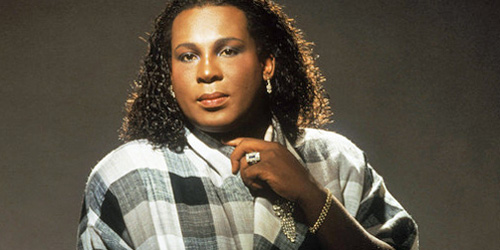
subtlesubversion-sylvesterjames-500As mush as his music offers listeners enjoyment, his life offers Americans insight into courage, creativity, and integrity. Sylvester was flamboyantly gay, but did not quite fit into the gay minority. He was a transvestite, but did not quite fit into the transvestite minority. He was black, but did not quite fit into the black minority. He was a Christian, but did not quite fit into any Christian minority. He certainly never fit into any majority.

My new column – “Queen of Disco: The Legend of Sylvester” – tells the fascinating and moving story of Sylvester. Anyone interested in American music, unorthodox Christianity, or the development of social progress since the 1970s, should read it.

I discovered Sylvester’s music after watching a documentary on his life aired by the television network, TVOne. I’ve long been a fan of Prince, and after hearing Sylvester sing, scream, and shout in his trademark falsetto, I realized that Prince had been ripping off Sylvester’s vocal style for decades. Because of the obscurity of Sylvester, Prince was able to successfully pull of the heist, and escape from the scene of the crime, undetected.

A reader who follows some of my writing emailed me with surprise and confusion over where Sylvester fits into my musical palette. He seems like an unlikely choice thrown into the mix with John Mellencamp, Warren Haynes, and Bob Seger, but the most resonant lesson of Sylvester’s life is that an interesting person – and a good life – evades category.

Sylvester’s spirit spoke to me, and with a voice as beautiful and big as his, who could resist?