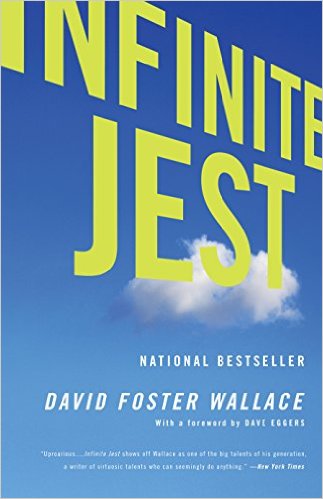
New Column at Salon: Donald Trump and The Hobbling of Shame – David Foster Wallace Warned Us about Reality TV

In my new column for Salon, I examine how entertainment values have corrupted the American political process, comparing Donald Trump to a pro wrestling character, and his admirers to frenzied WWE fans. The corrosion of civic virtues in the name of entertainment vices began long before Trump’s entrance into politics, but the new president-elect represents the culmination of it.

The late David Foster Wallace, one of America’s great writers, was obsessed with America’s addiction to entertainment, and how it would make the country weaker and dumber. His prophetic wisdom makes for the perfect predicate to my analysis of the presidential election circus.

Read the entire essay at Salon.

41ehzhqumol-_sx321_bo1204203200_

New Column at Salon: My College Students aren’t ‘Snowflakes’ – They are Tougher than their Critics

In my new column for Salon, I ridicule the sanctimonious and cowardly baby boomers who refuse to surrender their favorite hobby – demeaning young people.

My years of teaching experience at the college level have allowed me to meet many different students. I consistently find them smart, strong, and even inspiring. Studies of campus life demonstrate that “trigger warning,” “safe spaces,” and tantrums of “political correctness,” are actually quite rare, despite the alternative reality that boomers, and right wing media commentators, have invented.

I’ve had students who have survived cancer, recovered from the unexpected death of family members, lost their homes in natural disasters, and continue to work and study in the pursuit happiness, even while they suffer a financial burden for their education that previous generations never shouldered.

They are tougher, and better for the country, than their critics.

Read the column at Salon.

New Column at Salon: America’s Empty Culture of Hustling in the Age of Trump

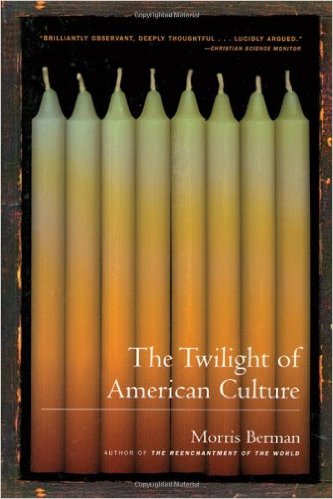
In my newest column for Salon, I use the recent footage of Mitt Romney devouring his own soul for the amusement of Donald Trump as a predicate to examine America’s destructive culture of hustling. Historian Morris Berman has argued that hustling is all that occupies the center of the United States, and because hustling is philosophically and ethically empty, it has led to irreversible decline throughout the country.

The election of Donald Trump is the political manifestation of the hustling culture.

Read the column at Salon.

51jx9ubestl-_sx331_bo1204203200_

New Column at Salon: The Right Wing Bubble

In my latest column for Salon, I address the boring bromide, in constant broadcast since the surreal victory of Donald Trump, that liberal Americans live in a bubble, rendering them unable to access reality or relate to the “real America.”

Logic and reason, as antiquated as they might be, demonstrate that it is actually the “real America” living in a closed-minded cocoon. An excerpt from my column:

When was the last time any mainstream commentator suggested that the rural, white Christian conservative Sunday School teacher escape her bubble, and befriend a group of black lesbians? Can anyone recall ridicule of a right wing, suburban housepainter who believes God watches his every brushstroke for not attending a public lecture from an award winning evolutionary biologist?

The absence of any criticism against the conservative bubble, which is undeniably smaller and tighter that the liberal bubble, demonstrates that American culture has condescended to the conservative with, to resurrect an old George W. Bush chestnut, “the soft bigotry of low expectations.”

No one reasonable really expects the right wing Christian conservative to escape their own cocoon. People who applaud when a political candidate proposes banning Muslims from entering the country know nothing about Islam. Voters who support someone who called Mexican immigrants “rapists” who are “bringing drugs,” probably never knowingly met a Latino who emigrated from Mexico. The conservative bubble of bigotry and ignorance actually damages the country, and results in destructive public policy, while the liberal bubble results in nothing more that slightly damaged feelings. Insulated progressives might adopt snobbery when considering the daily routine of “hillbillies” and “rednecks,” but they actively support political leaders who aim to alleviate poverty. The rural whites who “cling to their guns and religion,” as President Barack Obama rightly said, benefit when the liberals they hate enter high office. One of the interesting numbers to track after Trump’s inauguration is how many poor white people lose access to health care if the President-Elect keeps his promise to “repeal Obamacare.”

 The coating of the conservative bubble is often so dense that it prevents inhabitants from accurately identifying their own interests.

Read the entire column at Salon.

New Essay at Salon: Revisiting Walt Whitman’s, “Democratic Vistas”

In my new essay for Salon, I revisit the master’s work, paying particular attention to the 1871 essay, “Democratic Vistas.” Whitman’s exploration of the struggle of democracy, the beauty and necessity of diversity, equality for women, the gullibility of the populace, and the essentiality of creating a culture of democracy, with the fine arts at the center, applies to America in 2016 with stunning prescience.

My essay includes references to Whitman’s true masterpiece, the epic poem, Leaves of Grass, but most of the focus is on the underrated “Democratic Vistas,” because it is there that Whitman directly confronts all of the triumphs and traumas of the American experiment in self-governance. His wisdom shows no signs of age. My essay begins:

The most wise and visionary analysis of American culture, and the presidential race, in 2016 comes from 1871. In the profound and prescient essay, “Democratic Vistas,” Walt Whitman addressed a nation struggling to unify after civil war, and in the turbulence of its democratic struggle, continuing to fail to extend its promise of “life, liberty, and the pursuit of happiness” to all of its people. Leaves of Grass, Whitman’s masterpiece, exercised as inspiration the beauty and brutality of any attempt to turn E Pluribus Unum into reality. The ongoing altercation to amplify what Whitman, in his poetry, called “the password primeval” and “the sign of democracy” has defined the presidential campaign in ways that would surprise even the sharpest of observers. Whitman believed that the sign of democracy included the voices of slaves, prostitutes, deformed persons, the diseased and despairing, and anyone else whose body gives off the human scent – “an aroma finer than prayer.”

Read the rest at Salon.

whitman_walt_1819-1892_-_1887_-_ritr-_da_eakins_thomas_-_da_internet

New Essay at Salon: Trump is the White Boomers’ Last Gasp – The Future Looks Bright Ahead

In my new essay for Salon, I explore an obvious issue of the current race, not receiving much attention. White male baby boomer nostalgia for their bygone era of cultural control has empowered the Trump movement. The mainstream media has given Trump a dramatic advantage by continually talking about how Americans are “angry” and “pessimistic,” and by broadcasting maudlin segments on the anxieties of the white working class. Studies and surveys demonstrate that blacks and Latinos are optimistic and hopeful about their own lives and American politics, while millennials are the most hopeful group in the entire country. Trump, with the media’s assistance, presents the disaffection of a narrow group – white baby boomers – as if it represents the mood of the entire nation.

Rapidly shifting demographics, and the increasingly liberal bent of Americans under the age of 45, should give everyone hope, even if the unthinkable happens, and Trump does pull off an unlikely upset. His vision is dying, and the story that he represents – the story of the conservative, chauvinistic white male baby boomer – is losing relevance with every day.

Regardless of the outcome on November 8th, the Trump campaign is the last gasp of the conservative white boomer.

Read the essay at Salon.

New at Salon: Interview with Nathan Rabin on Donald Trump and The Insane Clown Posse

George Carlin once explained that when “you’re born you get a ticket to the freak show, and when you are born in America, you get a front row seat.”

Nathan Rabin, former head writer at the Onion A/V Club, cultural critic and author of “The Big Rewind,” has decided to test the veracity of Carlin’s theory with his new ebook, “7 Days in Ohio: Trump, The Gathering of the Juggalos, and The Summer Everything Went Insane.” Rabin is also able to offer insight into who the real freaks are: Are they fans of the socially stigmatized rap group, Insane Clown Posse, whom the FBI has labeled a dangerous organization and public threat, or Republican Trump supporters? At the risk of spoiling the fun, I’ll mention that the maniacs are not the ones wearing circus makeup.

In his equally amusing, fascinating and moving new book, Rabin chronicles his week in Ohio, attending both the annual Gathering of the Juggalos and the Republican National Convention. As if that were not enough to provide fodder for entertainment and journalism, Rabin spent the seven days with his long-lost brother, allowing him to further reflect on broken families, fractured relationships and the painful consequences of disconnection.

Rabin writes with his characteristic wit, but he also maintains an empathy that is staggering in its profundity and potency. As clichéd as it might seem, when I read Rabin’s account and analysis of Republicans, who frightened him, and Juggalos, who inspired him, mixed together with his own traumatic family history, I experienced the full range of emotional response — rage, laughter, tears.

I recently had the pleasure of interviewing Rabin over email.

Read the exchange at Salon.

usethisoneforamazon

New at Salon: Interview with Award Winning Toxicologist on The Deadly Legacy of the Iraq War

In “Last to Die,” his protest song against the war in Iraq, Bruce Springsteen sings, “We don’t measure the blood we’ve drawn anymore. We just stack the bodies outside the door.”

When the U.S. government and the world’s most lethal military force subject an entire country to torture and torment, the wounds fester long after bored Americans direct their attention elsewhere, and explosions and bloodshed, thousands of miles away and across the ocean, fail to attract news cameras.

The American people and their politicians might have moved on from Iraq, but the American presence of violence and devastation still hurts and haunts the lives of Iraqis. As a direct result of the U.S. invasion and occupation, Iraqi children now have high levels of lead contamination, and pregnant women and the elderly population suffer from expensive and painful health problems. There is an epidemic of birth defects and disabilities throughout the beleaguered country, but much of the world, and especially the U.S., continues to ignore the health crisis and moral catastrophe.

The casualty count, even if the war is over, continues to rise. Bombs and bullets damage the lives of millions of Iraqi civilians, subsequent to their detonation, and penetration of human skin. In America, the war in Iraq is too often reduced to a “mistake,” but for Iraq it is a merciless reaper that will continue to visit the homes of innocent people for generations.

Mozhgan Savabieasfahani, winner of the 2015 Rachel Carson prize, is a toxicologist, author and researcher at the University of Michigan. Since 2004, she has organized research expeditions in Iraq to measure the contamination and pollution that’s causing widespread sickness and death. Her team’s conclusions should horrify any thoughtful and ethical person and galvanize the entire world, with U.S. leadership, to react immediately and aggressively to save the lives of Iraqi children. Just as America is responsible for the war in Iraq, it is responsible for its consequences.

I recently interviewed Savabieasfahani via email about her work.

Read the conversation at Salon.